Many people confuse "biocompatible printing" with "bioprinting living cells." They're related, but they're not the same thing. Printing a biocompatible material means the finished part won't harm biological tissue on contact. Bioprinting means depositing living cells inside a bioink to grow tissue-like structures.
This article covers material types, printing technologies, the full production workflow, real-world applications, selection criteria, and the regulatory guardrails that matter most.
Key Takeaways
- Material diversity: Polymers, hydrogels, ceramics, metals, composites, and bioinks each meet distinct performance needs.
- Holistic evaluation: Printer technology, material formulation, geometry, and post-processing must be assessed together, not separately.
- Medical-grade rigor: Clinical applications require biocompatibility testing, sterility validation, and mechanical performance data beyond dimensional accuracy.
- Current applications: Biomaterials already support tissue models, dental devices, scaffolds, and drug research, though full organ printing remains years away.
What Are Biomaterials in 3D Printing?
A biomaterial, in this context, is any printed material selected specifically for how it interacts with biological systems. That could mean cells, tissue, bodily fluids, drugs, or even a sterile manufacturing environment. The selection criteria go well beyond "does it print cleanly."
Key Terms You'll Run Into
These terms get used interchangeably, but they mean different things:
- Biocompatible: won't trigger a harmful biological response on contact
- Biodegradable: breaks down naturally over a defined period
- Bioactive: actively encourages a biological response, like bone growth
- Scaffold: a printed structure that supports cell attachment and tissue growth
- Bioink: a printable formulation that may contain cells, biomaterials, or bioactive compounds
A material's suitability depends entirely on context. A polymer safe for a one-hour surgical guide might be completely wrong for a permanent implant. Exposure duration, contact type, and required performance all shift the equation.
What Makes a Biomaterial Printable
Printability and biological suitability are separate questions, and materials don't always score well on both. Key factors include:
- Viscosity and flow behavior
- Curing or crosslinking speed
- Layer adhesion and dimensional stability
- Strength, flexibility, and porosity
- Surface characteristics
A material can be biologically perfect and nearly impossible to print reliably. Collagen, for example, offers excellent cell compatibility but gels slowly and lacks mechanical stability on its own, which is why it's often blended with other components [source 10].
The reverse also happens: a material might extrude beautifully and hold its shape, yet fail biocompatibility testing entirely.
Acellular Printing vs. Cell-Laden Bioprinting
There are two distinct approaches here. Acellular printing creates a scaffold first, and cells get seeded onto it afterward. Cell-laden bioprinting embeds living cells directly into the bioink during the print itself.
A peer-reviewed study on bioprinting notes that rheology controls printability, structural fidelity, and cell viability simultaneously. Excessive pressure or shear during printing can damage cells, while too little viscosity compromises structural integrity [source 30]. Getting this balance right is the central engineering challenge in bioink formulation.

Common Biomaterials Used in 3D Printing
Material choice shapes everything downstream, from print settings to regulatory pathway. Here's a breakdown by category.
Polymers
Polymers cover the widest range of biomedical 3D printing applications:
- PLA: biodegradable, relatively easy to print, common in surgical guides and models
- PCL: flexible, slower to biodegrade, used in longer-term biomedical applications [source 4]
- PEG-based materials: biocompatible in vitro and in vivo, often blended with gelatin or fibrinogen for bioinks [source 10]
- PEEK: high strength-to-weight ratio, chemically resistant, compatible with gamma sterilization and CT/MRI imaging, making it useful for orthopedic and spinal implants [source 33]
PEEK has an interesting trade-off: its chemical inertness supports biocompatibility, but that same inertness can slow bone attachment unless the surface is modified [source 33].
Hydrogels
Hydrogels dominate bioprinting because their high water content mimics natural tissue environments. Common examples include:
- Alginate: highly printable, forms gels through ionic crosslinking with calcium
- Collagen: supplies natural cell-attachment cues but gels slowly
- Gelatin/GelMA: supports cell spreading with reasonable extrusion printability [source 10]
- Hyaluronic acid: generally strong biocompatibility profile
- Fibrin: investigated in combination with collagen for skin constructs
The recurring trade-off: softer hydrogels support better cell behavior, but they're mechanically weak on their own. Reinforcement adds strength but also adds formulation complexity [source 10].
Ceramics and Bioactive Ceramics
Researchers are evaluating calcium-phosphate-based ceramics, including hydroxyapatite, for bone-like applications. A 2022 scoping review looked specifically at their use in alveolar bone regeneration [source 34].
These materials still need application-specific testing for porosity, degradation rate, and mechanical behavior. A promising lab result doesn't automatically translate into a validated clinical product.
Metals and Alloys
Titanium, cobalt-chromium, and magnesium alloys show up repeatedly in biomedical additive manufacturing literature, alongside niobium, tantalum, nitinol, and stainless steel [source 32]. Powder quality, porosity, surface finish, and corrosion behavior all need validation for the specific implant application. Printable doesn't mean implant-ready.
Composites and Bioinks
Combining polymers, ceramics, hydrogels, and even growth factors or cells can create materials with more targeted performance. A collagen shell around a calcium alginate core is one documented example [source 10]. But every added component increases formulation complexity, sterilization challenges, and regulatory scrutiny. More ingredients means more variables to control.
3D Printing Technologies and the Biomaterial Workflow
Different printing technologies suit different materials and structures. Choosing the wrong one can undermine an otherwise solid material choice.
Comparing the Main Approaches
| Technology | Strengths | Constraints |
|---|---|---|
| Extrusion | Handles viscous materials, multi-material capable, accessible | Lower resolution, shear stress risk to cells |
| SLA/DLP | High detail, fast full-layer curing | Needs photoinitiator and cell-compatibility checks |
| Inkjet | High resolution (up to ~50 microns) | Requires low-viscosity inks, limited cell density [source 29] |
| Laser-assisted | High viability, nozzle-free precision | Needs laser-compatible material formulation |
| Powder-bed | Complex porous metal/ceramic structures | Requires post-processing and residual control |
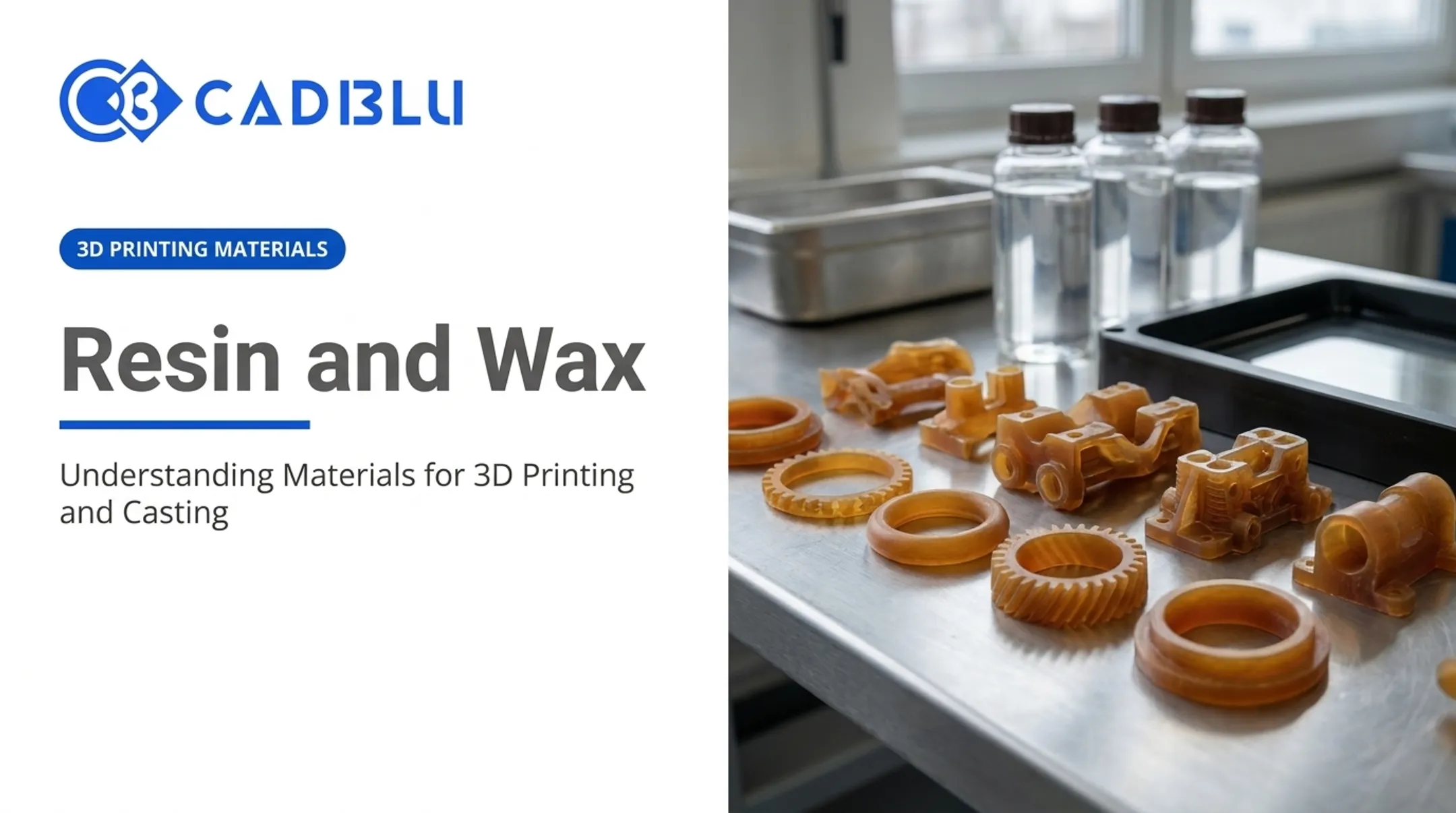
CAD BLU's ProJet MJP 2500 Plus, for instance, uses MultiJet Printing to reach up to 1600 × 900 × 790 DPI. Minimum feature sizes drop to 300 microns in its highest-resolution mode, and it supports materials with USP Class VI and ISO 10993 certifications, depending on the specific material selected.

The Three-Stage Workflow
- Pre-printing: Build or import the CAD/scan model, select material, prepare the bioink or feedstock, and set process parameters
- Printing: Control temperature, layer height, extrusion pressure or light exposure, and environmental conditions
- Post-printing: Apply crosslinking, curing, washing, sterilization, incubation, or surface treatment as needed
FDA's own guidance on additively manufactured devices emphasizes documenting machine parameters, qualifying equipment, and identifying worst-case build orientation before performance testing [source 25]. This documentation is mandatory: it catches problems before they reach a patient or a lab bench.
Quality Control You Shouldn't Skip
Pore size, wall thickness, and channel geometry directly affect how fluids move through a structure and how cells behave inside it. A digital model built for aesthetics won't automatically perform well biologically, so every patient-specific or research-critical file needs error-checking before it goes anywhere near a printer. That checking extends into formal quality control:
- Inspect dimensions against the original model
- Verify material consistency across batches
- Test mechanical strength and degradation over time, not just immediately post-print
- Assess sterility and bioburden
- Test cell viability where applicable
- Check repeatability across production runs
If you're evaluating commercial equipment for this kind of work, printer-material compatibility matters as much as the printer's spec sheet. CAD BLU works with organizations on this exact evaluation, covering software workflow, installation, operator training, and ongoing technical support. That said, no equipment provider replaces the clinical or regulatory review a medical application actually requires.
Applications of 3D-Printed Biomaterials
Tissue Engineering and Scaffolds
Printed scaffolds provide a temporary framework where cells attach, multiply, and develop into tissue. Research covers bone, cartilage, skin, nerve, and vascular applications. Cartilage remains particularly difficult because it's naturally avascular, and a comprehensive review identifies vascularization and long-term viability as major unresolved hurdles [source 12]. Most of this work is research-stage, not routine clinical practice.
Medical and Dental Applications
This is where 3D-printed biomaterials have the most established footing:
- Patient-specific anatomical models for surgical planning
- Dental models, crowns, and bridges
- Surgical guides and splints
- Prosthetic components
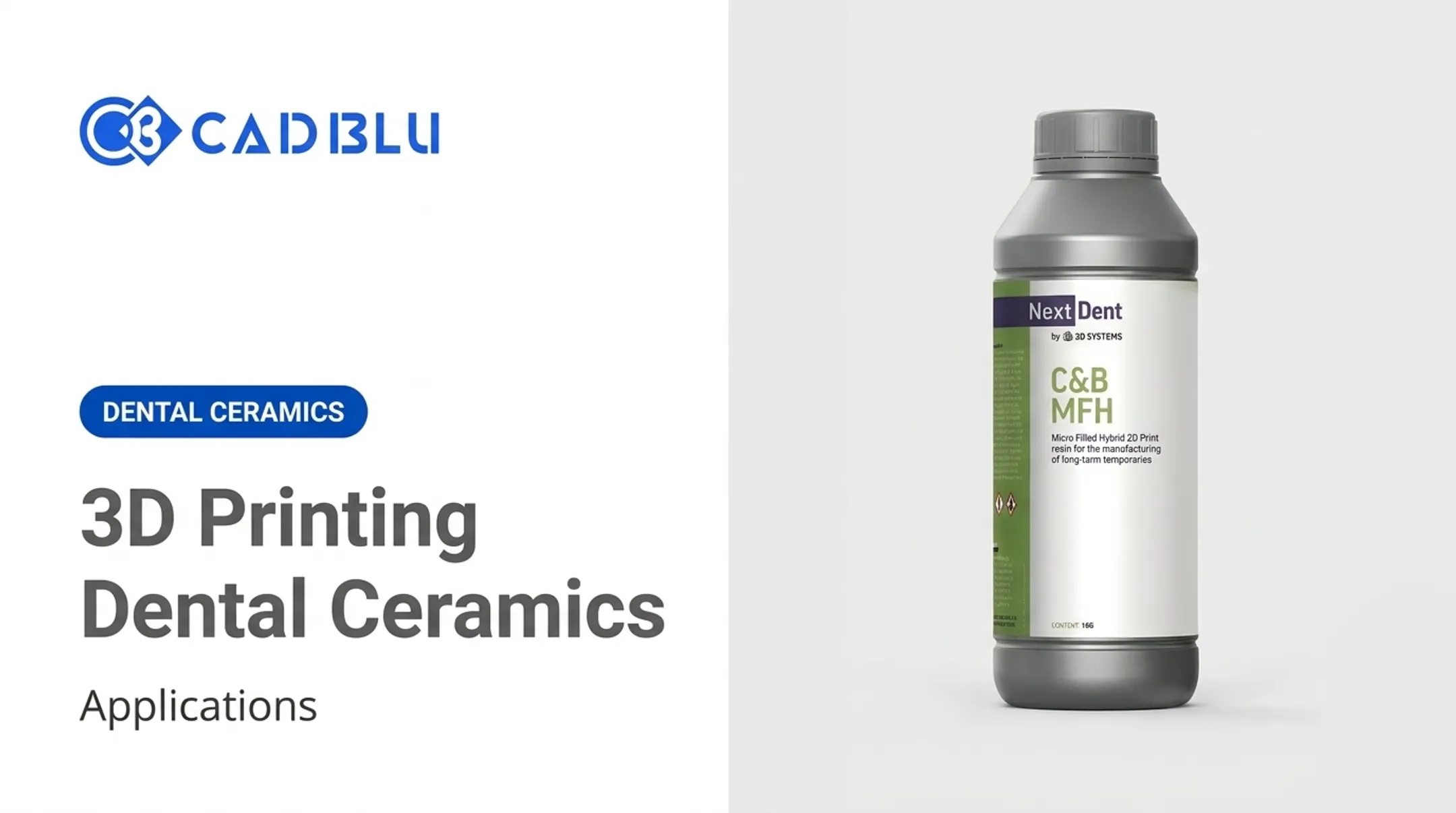
CAD BLU's NextDent 5100 system, for example, supports 12 clinical indications across 30 different dental materials, including surgical guides, night guards, and both temporary and long-term dentures. Its materials carry CE certification under the Medical Device Directive, with FDA listing status noted for specific products.
One verified regulatory example: FDA record K231834 documents 510(k) clearance for a PEEK cranial implant made with implantable-grade filament, cleared for patients 21 and older [source 18, 19]. That's a specific, named device clearance, not a blanket approval for all PEEK-based printed products.
Drug Discovery and Disease Modeling
3D tissue models can represent biological structures more accurately than flat cell cultures, though they don't automatically reproduce whole-body responses. A 2025 study on a bioprinted liver model offers a strong example. Printed tissue discoids maintained albumin and urea synthesis over three weeks, expressed more than 100 liver-associated genes, and metabolized multiple test compounds after exposure [source 16]. That's solid evidence for pharmacology testing, not proof of organ replacement.

Wound Healing and Drug Delivery
Printed hydrogel dressings are an active research area, covering hemostatic, antibacterial, and skin-regeneration designs using extrusion, inkjet, and light-curing methods [source 35]. Any claim about faster healing needs to be backed by laboratory, animal, or clinical evidence specific to that formulation.
The Long Road to Organ Printing
Vascularized tissue and full organ printing remain developing research areas. The technical barriers are significant: building blood supply networks, achieving nerve integration, scaling cell maturation, and managing immune response all need solving before this moves from lab to clinic. Fully functional, routinely transplantable printed organs aren't available today.
How to Choose a Biomaterial and Printing Method
Start with the end use. Is this a research model, a surgical planning tool, a temporary scaffold, or an implantable device? That answer shapes everything else.
Build a Selection Checklist
- Biocompatibility requirements for the intended contact
- Biodegradation timeline (if applicable)
- Mechanical behavior under real-world loads
- Porosity and surface properties
- Sterilization compatibility
- Print resolution needs
- Expected production volume
Match Material to Printer
Extrusion, light-based, and specialized methods each handle viscosity, curing, and throughput differently. A material rated for DLP printing won't necessarily perform the same way through an extrusion nozzle. Review the supplier's technical data sheet, safety documentation, and any application-specific evidence before purchasing.
CAD BLU's Figure 4 MED-AMB 10, for example, reports tensile strength of 61–71 MPa across multiple print orientations, a heat-deflection temperature of 119°C, and 0.26% water absorption over 24 hours. That level of documented, orientation-tested data is what you should expect from any material you're evaluating for a biomedical application.

Stage Your Validation
- Start with printability and dimensional checks on your target printer
- Test mechanical and biological performance under realistic loads
- Verify repeatability across material batches
- Finish with application-specific validation, including sterilization and end-use trials
Labels like "biocompatible," "medical grade," or "bio-based" don't automatically confirm suitability for your specific patient, device, or application. As CAD BLU's own material documentation notes, each customer is responsible for confirming a material is safe and technically suitable for its intended use.
Benefits, Limitations, and Safety Considerations
What This Technology Delivers
- Geometric freedom that traditional manufacturing can't match
- Patient-specific customization
- Faster iteration during device development
- Less material waste in many workflows
In CAD BLU's experience working with medical device developers, 3D printing lets teams produce and test functional prototypes in a fraction of the time required by traditional methods, enabling more design iterations.
Where It Still Falls Short
- Inconsistent printability across batches
- Shrinkage and warping in certain materials
- Weak interfaces between printed layers
- Cell damage from processing stress
- Unpredictable degradation rates
- Difficulty replicating complex tissue environments
Safety and Regulatory Reality
Contamination control, sterilization validation, and material traceability form the backbone of a defensible biomedical product.
FDA's September 2023 guidance on ISO 10993-1 uses a risk-management approach to biological evaluation, tailoring endpoints to intended contact type and duration. Product categories fall under different regulatory pathways: medical devices generally follow 510(k), PMA, or De Novo routes, while cell-containing products often fall under separate biologics considerations.

None of this replaces qualified regulatory counsel. If you're developing anything patient-facing, current FDA guidance should be your starting reference point, not a summary blog post.
The bigger picture: biomaterial printing should be evaluated as a complete workflow. Material, printer, software, post-processing, testing, and documentation all matter together. Treating it as a simple material purchase misses most of what actually determines success.
Frequently Asked Questions
Can I drink out of a PETG cup?
It depends on the specific filament formulation, printer cleanliness, layer gaps, and any additives used. A generic 3D-printed PETG cup shouldn't be assumed food-safe without verifying food-contact compliance for that exact material and process.
What are some common biomaterials used in 3D printing?
Polymers, hydrogels, ceramics, metals, composites, and bioinks are the main categories. The right choice depends on the application and its biological and mechanical requirements.
What is the difference between 3D printing and 3D bioprinting?
3D printing may use biocompatible materials to create a part or scaffold without any living cells involved. 3D bioprinting specifically involves bioinks containing cells or other biologically active components.
Are 3D-printed biomaterials safe for medical use?
Safety depends on the material, device design, manufacturing controls, sterilization, and applicable regulatory review. Not every biomaterial is clinically approved or cleared for every use case.
What is a bioink?
A bioink is a printable formulation that may contain biomaterials, living cells, and biologically active components. Formulations are designed to balance printability with biological function.
What are the main challenges of 3D printing biomaterials?
Key challenges include maintaining printability alongside cell viability, achieving reliable mechanical strength, controlling degradation, and building vascularized structures. Sterility, repeatability, and regulatory validation add further complexity.