Introduction
A grinding habit that wakes up a partner. A tooth that suddenly feels loose after a fall. Jaw pain that won't quit after weeks of clenching through a stressful project.
Each of these problems can lead to the same conversation with a dentist: do you need a splint?
The word "dental splint" covers a lot of ground. Some splints calm jaw muscles and manage bite forces. Others stabilize a mobile or traumatized tooth while it heals. The right appliance depends entirely on what's actually wrong, and that call belongs to a dentist.
This article breaks down the main types of dental splints and their applications, clarifies how splints differ from retainers and night guards, and looks at where digital design and 3D printing fit into modern splint production.
One thing stays constant throughout: a dentist must diagnose the condition and approve the design, material, fit, and wear schedule before any appliance touches a patient's mouth.
Key Takeaways
- "Dental splint" covers occlusal devices for bruxism or jaw symptoms and periodontal or trauma splints that stabilize teeth
- 3D printing is manufacturing, not treatment; match technology and resin to the appliance's intended use
- Digitally made splints require accurate scans, validated design, correct post-processing, and a professional fit check
- Fixed periodontal splints and removable printed appliances differ in clinical purpose and maintenance needs
What Is a Dental Splint?
A dental splint is a device that protects teeth, changes how occlusal forces are distributed, limits unwanted movement, or stabilizes teeth and surrounding tissue. Those functions span several distinct appliance categories.
Occlusal splints typically sit over one arch and manage contact between upper and lower teeth. Periodontal or trauma splints work differently — they connect an affected tooth to its neighbors for physical support during healing.
Keep the treatment goal separate from the manufacturing format. A splint can be:
- Fabricated conventionally by hand in a lab
- Digitally designed and milled from a solid disc
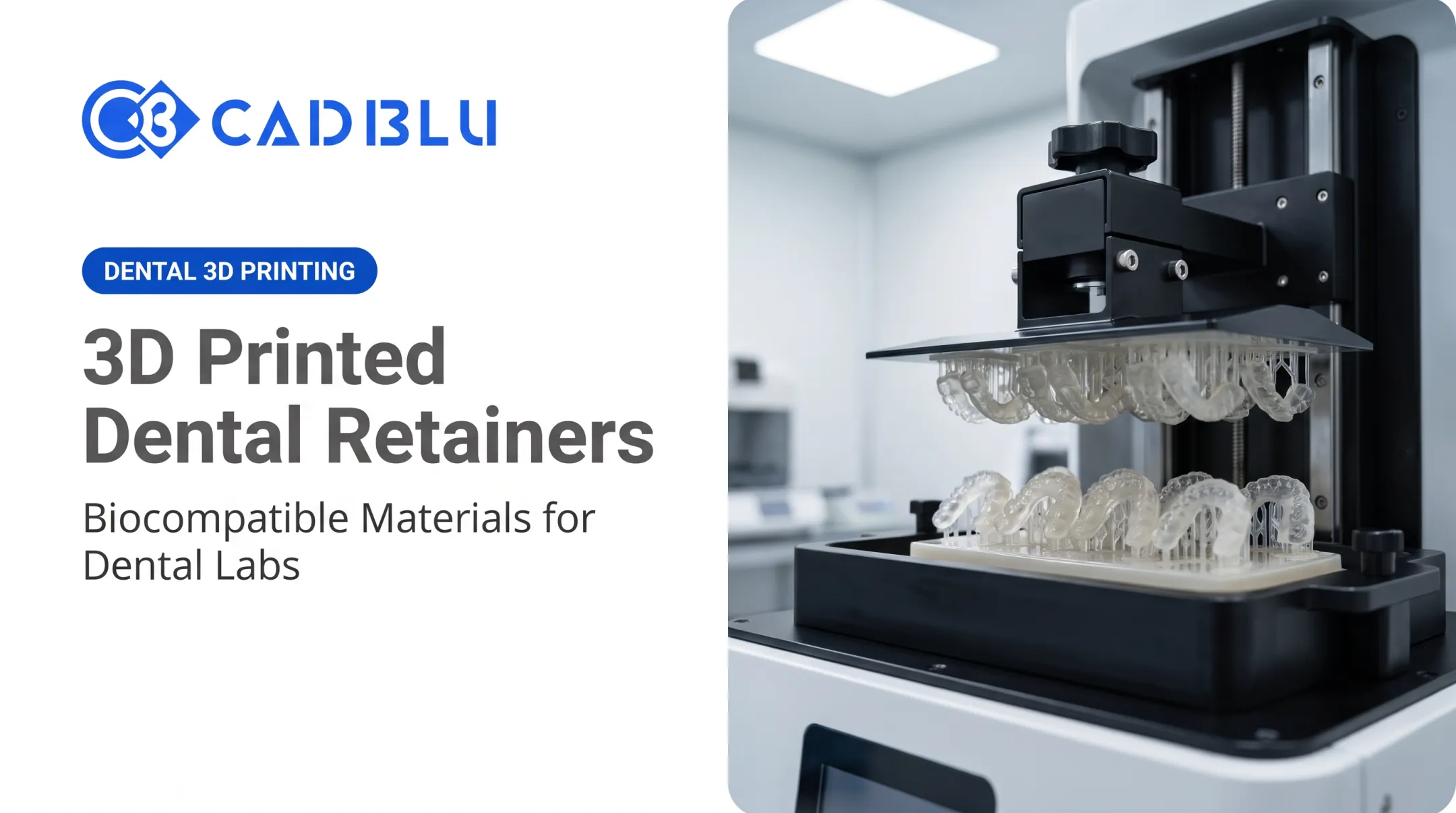
- Digitally designed and 3D printed in resin
The format doesn't change the diagnosis behind it. A dentist still decides whether a patient needs an appliance at all, and which category fits.
When to See a Dentist
Certain symptoms call for a professional evaluation rather than a trip to the drugstore aisle:
- Persistent jaw pain or clicking
- Noticeable tooth grinding, especially reported by a partner
- A tooth that suddenly feels loose
- Any dental trauma, even if it seems minor
- A bite that feels different than it used to
A splint can support treatment, but it doesn't replace addressing gum disease, an injury, or whatever caused the symptom in the first place.
Dental Splint Types and Their Applications
Splints are generally grouped by clinical purpose, not by material or brand.
Occlusal, Periodontal, and Trauma Splints
Occlusal or stabilization splints manage jaw-muscle and TMJ-related symptoms, bruxism, and unstable bite patterns. Reported indications include masticatory myalgia, TMJ arthralgia, and stress-related muscle symptoms.
A widely cited review also notes that occlusal splints haven't been shown to outperform physiotherapy for every TMD case, and that wearing a splint around the clock can cause irreversible bite changes.
Periodontal splints stabilize teeth loosened by gum disease, trauma, or orthodontic movement. A 2025 review of periodontal splinting describes temporary, provisional, and permanent designs, with fiber-reinforced composite offering strength at the cost of harder cleaning and lower aesthetics.
Trauma splints hold a repositioned tooth still after luxation, avulsion, or root fracture. Guidelines here are specific: extrusive luxation typically calls for two weeks of splinting, while lateral luxation and root fractures generally need four.

Removable vs. Fixed Designs
- Removable: Patient inserts and removes them; preferred for occlusal therapy when hygiene access and adjustability matter
- Fixed: Bonded in place for continuous stabilization in active periodontal or trauma cases
The choice depends on tooth mobility, occlusion, periodontal status, and the treatment goal — not personal preference.
Rigid vs. Flexible Materials
Rigid materials generally hold occlusal contacts more predictably and resist wear better over time. Flexible or soft materials can feel more comfortable at first, but a softer surface can sometimes encourage more chewing or clenching rather than less. Flag that tradeoff for patients who assume softer is always better.
Extra-Coronal vs. Intra-Coronal Splints
An extra-coronal (bonded) splint attaches to the outer tooth surface with minimal or no preparation — reversible and generally easier on aesthetics. An intra-coronal splint sits within a prepared channel across several teeth, which can offer better retention but requires cutting tooth structure.
How a Splint Differs From a Retainer, Mouthguard, or Night Guard
| Appliance | Primary Purpose |
|---|---|
| Dental splint | Manages occlusal/jaw forces or stabilizes mobile/injured teeth |
| Orthodontic retainer | Maintains tooth position after braces |
| Sports mouthguard | Reduces injury risk during athletic activity |
| Night guard | Common label for a bruxism-protection appliance |
These terms get used loosely in everyday conversation, but they aren't interchangeable.
Periodontal splinting only works alongside treatment of the underlying gum disease or injury. Stabilizing a tooth does not regrow lost bone or clear an infection on its own.
3D Printing Options for Dental Splints
Not every part of the splint process gets printed, and not every splint is a candidate for printing at all. A bonded intraoral splint that connects teeth directly usually isn't produced as one printed piece. What 3D printing handles well:
- Removable, patient-specific occlusal appliances
- Diagnostic or working models
- Prototypes for design review
- Manufacturing aids like custom trays
Comparing Printing Technologies
Three vat-photopolymerization approaches dominate dental printing: SLA, DLP, and LCD (also called masked SLA). Formlabs' comparison of these technologies explains the mechanics:
- SLA cures resin point-by-point with a laser: precise, but slower on larger batches
- DLP projects an entire layer at once through micromirrors. It is fast, though resolution and build area trade off against each other
- LCD/MSLA uses an LED array behind an LCD mask. Throughput can stay strong even as build volume increases, provided pixel size and light quality are controlled

Whichever technology a lab chooses, following the printer manufacturer's validated parameters matters more than chasing a spec sheet number.
Not All Resins Are Created Equal
A dental model resin, built for diagnostic casts, is not the same material as one cleared for long-term intraoral wear. Formlabs, for instance, separates its Dental Model resin (crown-and-bridge models) from materials like Dental LT Clear or Dental LT Comfort, which carry intraoral-use claims.
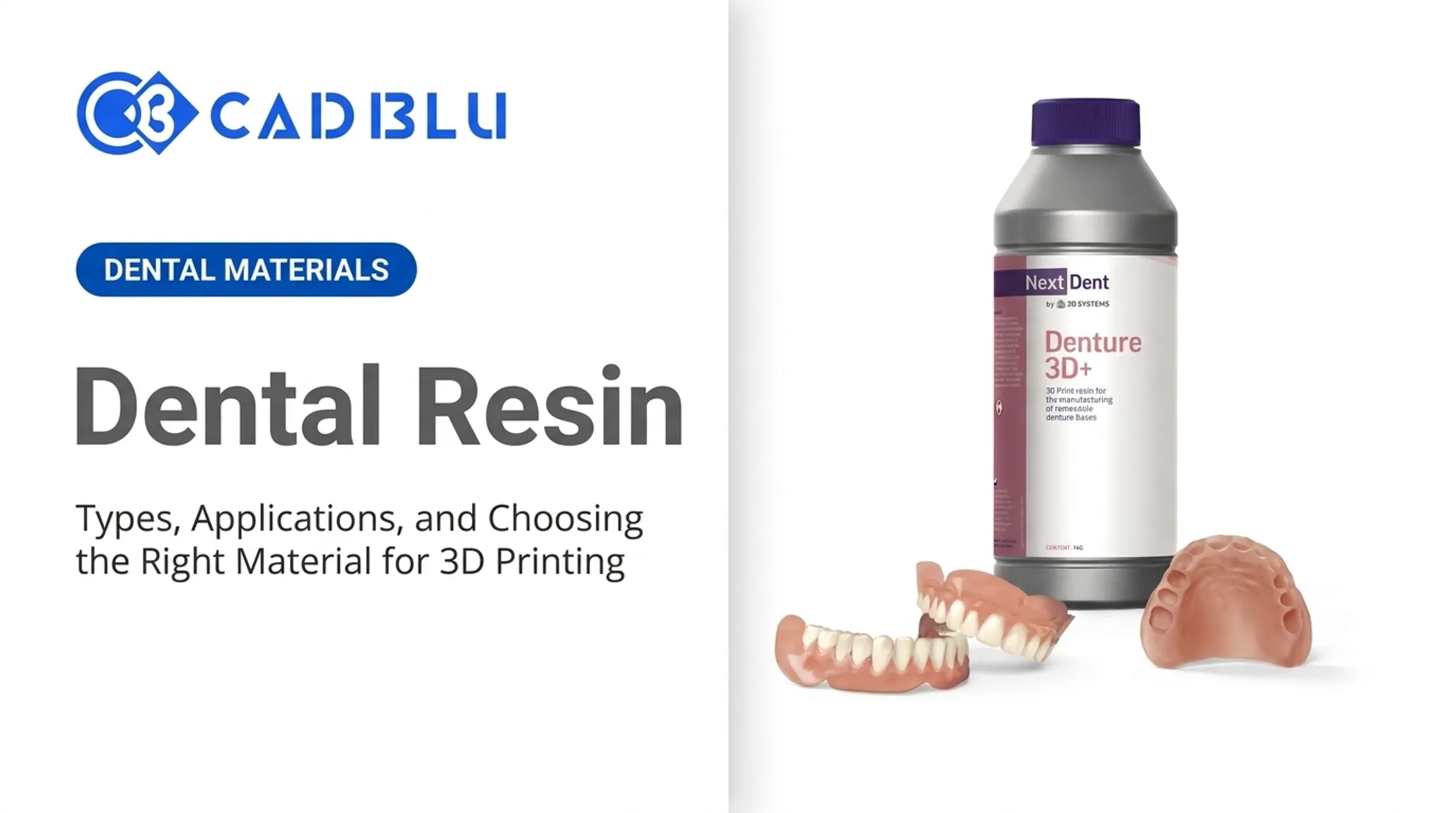
NextDent Ortho Rigid, a biocompatible Class IIa material used for digitally designed and printed splints, is one example of a resin formulated specifically for this application. Its biocompatibility claim only holds when it's printed on an approved printer and post-cured for the exact specified time. Skip that step, and the claim no longer applies.
Digital Inputs and Post-Processing
The workflow starts with intraoral scans or digitized impressions, bite records, and occlusion data, all fed into CAD software that designs relief, retention, thickness, and contact points.
After printing, appliances go through:
- Washing to remove uncured resin
- Support removal
- UV or thermal curing per manufacturer specification
- Finishing and polishing
- Inspection before it ever reaches a patient
Skipping or shortening any of these steps can affect fit, odor, surface quality, or the material's actual mechanical performance — not just cosmetics.
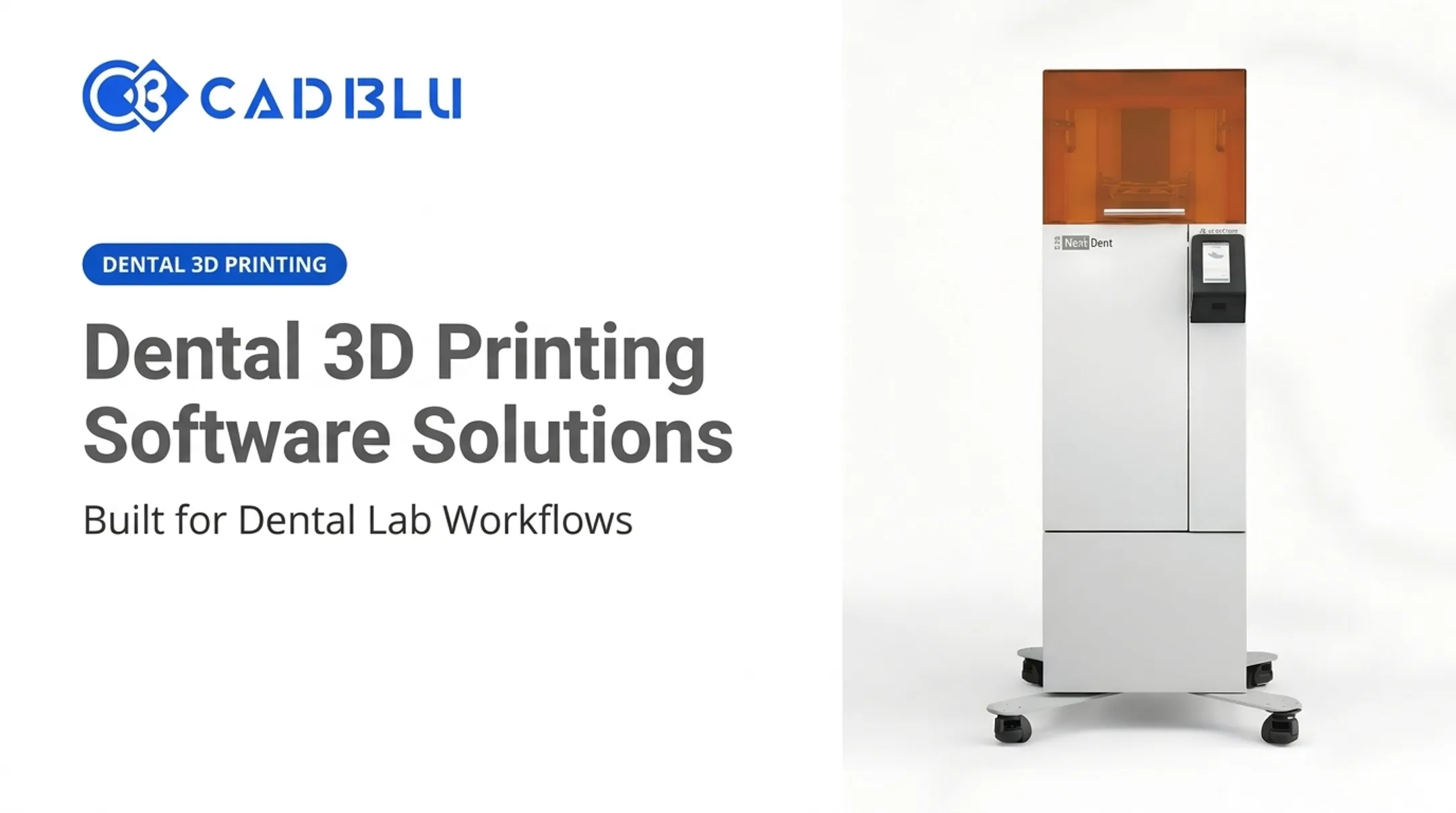
CAD BLU works with dental labs and clinics on this exact puzzle: matching a 3D printer, a validated resin, and the right software and post-processing equipment (wash units, UV curing boxes, mixers) to the appliance being made.
That is a workflow-assessment role. CAD BLU doesn't diagnose patients or approve a clinical indication, and the dentist remains responsible for validating the finished device for its intended use.
Digital Dental Splint Workflow and Selection Criteria
A digitally produced splint moves through several stages, and each one is a place where accuracy can slip.
The End-to-End Workflow
- Clinical exam and prescription
- Digital capture (scan or digitized impression)
- CAD design
- Design review
- Printing (in-house or outsourced)
- Post-processing
- Quality checks
- Delivery and chairside fit verification

Where Accuracy Risks Creep In
- Scan artifacts or incomplete capture
- Incorrect bite registration
- Design errors in relief, thickness, or occlusal contacts
- Print orientation choices that affect layer accuracy
- Resin shrinkage or distortion
- Support placement in contact areas
- Post-processing deviations: under-washing or under-curing
None of these are theoretical. Studies on printed occlusal splints report accuracy that shifts noticeably depending on print orientation, and polymerization shrinkage can measurably affect fit.
In-House vs. Outsourced Production
| Factor | In-House Printing | Outsourcing |
|---|---|---|
| Volume | Better for high, steady case volume | Better for low or variable volume |
| Upfront cost | Higher (printer, wash/cure units) | Lower |
| Staff expertise | Requires trained operators | Managed by the provider |
| Turnaround | Controlled internally | Depends on provider capacity |
A hybrid model (printing routine models in-house while outsourcing specialty appliances) is common for labs still building volume.
Questions to Ask Before Buying Equipment
- Is the printer validated for the specific resin you need?
- Does the software integrate with your existing scanner?
- What wash-and-cure equipment does the workflow require?
- What ventilation and handling does the resin call for?
- What's the service and training availability if something breaks?
- Can you trace material lot numbers back to each device produced?
Verification Before Patient Use
Before any splint leaves the lab, check:
- Dimensional accuracy
- Edges and surface finish
- Occlusal contacts
- Retention and patient comfort
Document the material lot and production settings used for each device.
CAD BLU supports this transition with OEM-trained technicians, installation, and workflow optimization for labs bringing printing in-house, along with repair and ongoing technical support. That support reduces friction in adoption; it doesn't guarantee a specific clinical outcome or production time, and it doesn't replace a lab's own quality checks.
Benefits, Care, Cost, and Limitations
What a Well-Made Splint Can Do
- Protect teeth from excessive or abnormal contact
- Improve stability while a tooth or joint heals
- Distribute occlusal forces more evenly
- Support comfort during an active treatment plan
None of this happens automatically. Outcomes depend on accurate diagnosis, good fit, and patient compliance.
Caring for a Splint
Removable appliances:
- Clean gently with cool or lukewarm water
- Avoid abrasive toothpaste or harsh chemicals
- Store in a ventilated case, not sealed and damp
- Bring it to scheduled dental checks
Fixed splints need extra attention around bonded areas, where plaque tends to collect. Flossing threaders or interdental brushes often help.
What Drives Cost
US pricing varies with splint type, how many teeth or arches are involved, imaging and scanning, fabrication method, material, and follow-up adjustments.
For context, one 2024 dental fee schedule lists a full-arch hard occlusal guard at $365 with a general dentist. That figure is plan-specific and should not be treated as a national average. Treating the underlying condition (gum disease, TMJ issues, trauma) adds its own cost on top.

Warning Signs Worth a Call to the Dentist
- Persistent pain or worsening mobility
- New pressure points or bite changes
- Cracks, odor, or poor retention
- Gum inflammation around a splint
Do not self-adjust an appliance or keep wearing it through these symptoms. Book an appointment instead.
Limitations (Including 3D-Printed Splints)
Fit, diagnosis, and compliance still decide outcomes, even when the appliance is printed. 3D printing can make splints more repeatable and easier to customize, but it does not replace clinical judgment, validated materials, trained operators, or proper quality control.
Frequently Asked Questions
How much does a dental splint cost?
Pricing depends on splint type, number of teeth or arches involved, fabrication method, material, diagnostic imaging, and treatment of the underlying condition. Ask your dentist for a written estimate specific to your diagnosis rather than relying on a general online figure.
What's the difference between a splint and a retainer?
A retainer's job is maintaining tooth position after orthodontic treatment. Dentists prescribe splints for different goals: managing occlusal forces, protecting teeth, or stabilizing a mobile or injured tooth.
Are dental splints painful?
Most patients tolerate the fit well, though temporary pressure, sensitivity, altered speech, or extra saliva can happen at first. See your dentist promptly if pain persists or your bite feels worse.
What is a dental splint?
It's a device that either manages occlusal contact between the upper and lower teeth (removable occlusal splint) or stabilizes teeth affected by gum disease or trauma (fixed periodontal or trauma splint). A dental professional chooses the right type based on your diagnosis.