The global 3D-printed jewelry market is projected to grow by USD 2.51 billion between 2020 and 2025, at a 22.14% compound annual growth rate, according to Technavio. That's a forecast, not a guarantee, but it reflects a real shift toward digital workflows in a trade built on tradition.
"Jewelry 3D printing" isn't one process. It might mean printing a castable resin or wax pattern for investment casting, producing a polymer model for approval, or building a metal component directly from a digital file. This guide breaks down each approach, the materials involved, and how to decide which fits your business.
Key Takeaways
- 3D printing supports prototyping, casting patterns, custom orders, and small-batch production, with select direct-metal applications available.
- Resin and wax printing dominate castable-pattern workflows, while direct metal processes build near-finished parts from powder feedstock.
- The right process depends on design complexity, material, volume, finish requirements, and available post-processing equipment.
- Precious-metal printing exists commercially, but availability and economics vary significantly by supplier and machine.
How Does Additive Manufacturing Work for Jewelry?
Additive manufacturing builds parts layer by layer from a digital 3D model, guided by the ISO/ASTM 52900:2021 standard definition of the process. That's different from CNC machining, which cuts material away from a solid block, and from mold-based casting, which requires a physical tool before you produce anything.
The typical digital workflow moves through several stages:
- Concept and CAD modeling
- File preparation and build orientation
- Support generation
- Printing
- Part removal and post-processing
- Inspection and final finishing
The Indirect Workflow: From CAD to Cast
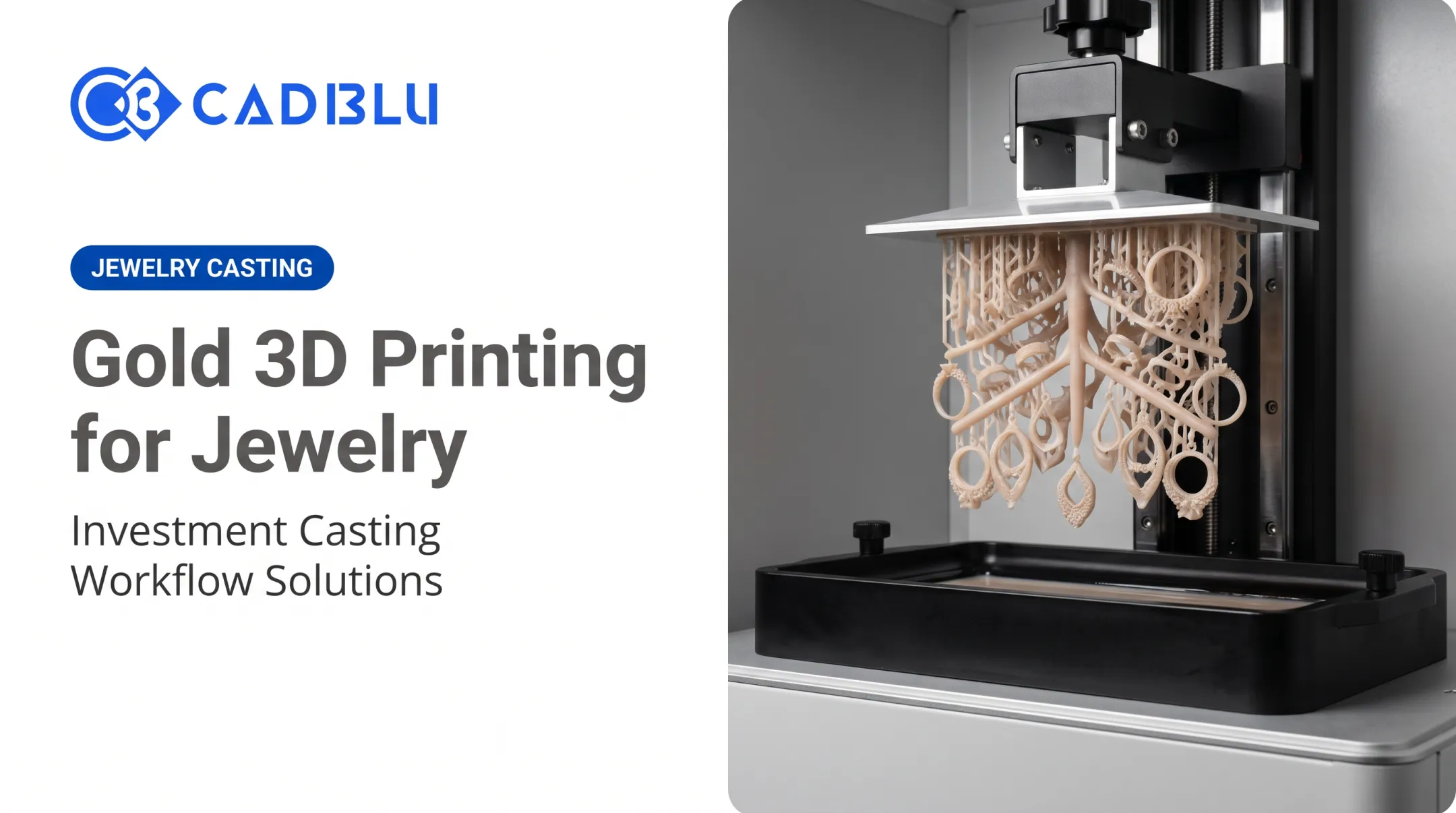
Most jewelry printing today is indirect. You create or revise a CAD model, print it as a castable resin or wax pattern, remove the supports, invest the pattern in plaster, burn it out, cast the metal, then finish the piece by hand.
This is the workflow behind printers like the MJP 2500W, which builds 100% wax jewelry patterns with razor-sharp edges and tight enough tolerances that finishing work drops significantly. A batch-support-removal process delivers patterns that are ready to invest without extensive cleanup.
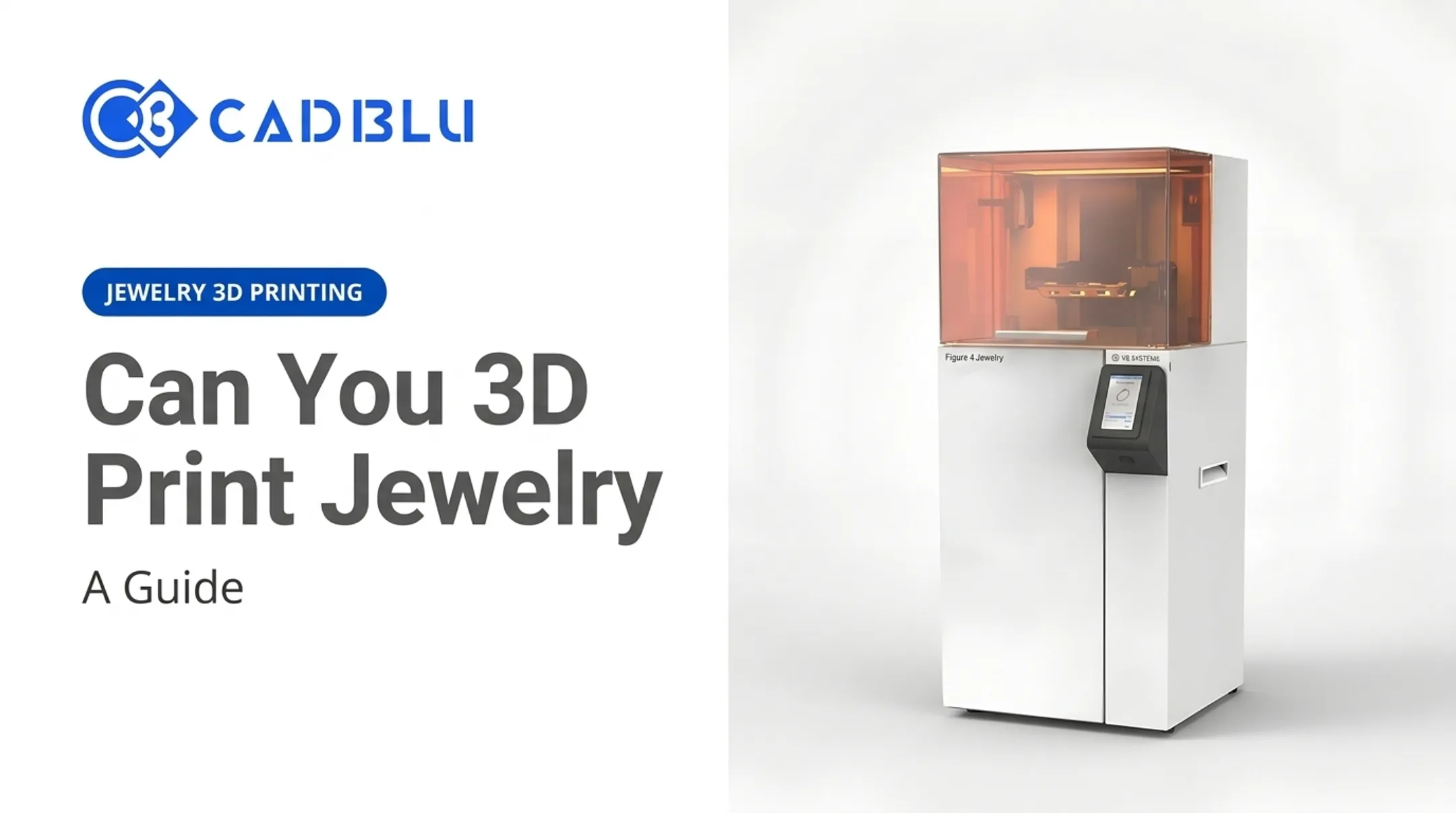
Say a customer wants a custom pendant sized and adjusted twice before final approval. With Figure 4 Jewelry, that pattern can be printed and cast the same day, letting a designer revise the file digitally rather than recarving a wax model by hand each time.

Direct Metal Production
Direct production skips the pattern step entirely. Metal powder or another feedstock is fused or bound layer by layer, sometimes followed by debinding, sintering, or heat treatment depending on the process.
What Determines Final Quality
The printer is only one link in the chain. Final pieces meet spec when the full workflow holds up:
- CAD model accuracy and clean geometry
- Material matched to cast or direct-metal use
- Calibrated machine and correct build orientation
- Controlled casting or sintering parameters
- Consistent hand finishing and inspection
Which Jewelry Applications Benefit from 3D Printing?
Not every jewelry job needs a printer. The biggest gains show up when designs change often or need personalization:
- Custom rings and intricate settings
- Pendants, earrings, and charms
- Bracelets and watch components
- Short-run fashion pieces with frequent style refreshes
Rapid Prototyping and Customer Approval
Before committing to casting, a printed physical model lets you check proportions, stone placement, and wearability. Printers such as the MJP 300W Plus can run several short-run batches a day, with overnight builds for larger jobs, so jewelers can turn around approval samples without disrupting production.
Complex Geometries That Are Hard to Carve
Additive manufacturing handles details that are painful to produce by hand:
- Delicate filigree and fine wire mesh
- Hollow structures and interlocking components
- Sharp prongs and intricate settings
- Lattice-like or organic forms
Dissolvable supports and fine-tip support structures on printers like the MJP 300W Plus reduce part-to-support interaction, which matters when a design includes thin wire elements that would snap during manual support removal.
Small-Batch and On-Demand Production
Digital files can be adapted for each order without cutting a new mold. Below the mold break-even volume, or whenever a design changes between runs, printing usually wins on cost and speed. Above that volume, with an unchanging design, traditional mold-based casting still tends to be cheaper per piece.
| Use Case | Better Fit |
|---|---|
| One-off luxury pieces | 3D printing |
| Custom orders with revisions | 3D printing |
| Fashion jewelry, frequent designs | 3D printing |
| High-volume identical collections | Traditional casting |
Case study: Titan Company Ltd (Tanishq, Gold Plus, and Zoya) adopted Materialise software and 3D-printed resin casting patterns to keep up with demand for intricate designs. Materialise reports the resin model was ready within a few hours, with finished jewelry deliverable the next day.
Titan also reported:
- Easier design modification between runs
- Tighter dimensional accuracy on cast patterns
- Faster resizing across product lines
Jewelry 3D Printing Technologies and Materials
Industry terminology groups additive manufacturing into seven process categories:
- Vat photopolymerization
- Material extrusion
- Powder bed fusion
- Binder jetting
- Material jetting
- Directed energy deposition
- Sheet lamination
Jewelry work leans on the first four—especially vat photopolymerization for castable patterns and powder-based methods when shops want metal parts more directly.
Vat Photopolymerization for Castable Patterns
SLA and DLP printing dominate jewelry pattern production because of the resolution and surface quality achievable. Formlabs lists a 25-micron minimum layer thickness for its Castable Wax Resin, producing smooth, accurate castings after burnout.
CAD BLU's Figure 4 JCAST-GRN 10 is a castable photopolymer built for fine-detail investment casting, with a 0.02 mm standard-mode layer thickness and an 8 mm/hr vertical build speed in standard mode. Resins in this class feed directly into lost-wax and investment-casting lines where pattern accuracy drives final metal quality.
Direct Metal Approaches
Laser powder bed fusion and metal binder jetting can produce jewelry components straight from powder. These processes require careful powder handling, and depending on the system, debinding, sintering, or heat treatment before the part is finished. Support removal is still often necessary.
Capability varies widely by supplier: not every system qualifies every precious alloy, and finishing steps and minimum feature size differ from one platform to the next. Confirm with the equipment provider which gold, silver, or platinum alloys the process actually supports before you plan a direct-metal workflow.
Comparing Common Jewelry Materials
| Material | Typical Role | Notes |
|---|---|---|
| Castable resin/wax | Printed pattern | Burned out before investment casting |
| Standard resin | Prototypes, fit models | Not formulated for clean burnout |
| Engineering polymer | Functional prototypes, fixtures | Useful for jigs and try-ons |
| Silver, gold, platinum | Final metal | Cast from patterns or direct-printed on qualified systems |
CAD BLU stocks materials like VisiJet M2 ICast, a 100% wax jewelry-casting material, and M2 CAST, a precision wax for metal casting patterns on the MJP 2500W platform. Both sit in the printed-pattern category rather than final-metal output—a distinction that matters when you price the full workflow.
Design, Finishing, and Quality Considerations
A great print doesn't automatically mean a great piece of jewelry. Design for additive manufacturing in jewelry usually comes down to a few consistent themes:
- Minimum wall thickness for hollow parts
- Escape holes so uncured resin or trapped material can drain
- Tolerances between moving components like hinges or interlocking links
- Support placement and build orientation to protect fragile details
Post-Processing Isn't Optional
Depending on the process, expect some combination of:
- Washing, curing, and support removal
- Debinding, burnout, and casting for lost-wax workflows
- Polishing, tumbling, plating, and stone setting
Skipping steps rarely saves time; it usually just moves the problem downstream.
On the MJP 300W Plus, minimal break-away supports reportedly cut post-processing time by up to 60%, material waste by up to 50%, and cleaning-solvent use by more than 50% compared to heavier support structures. That's a meaningful difference when you're running multiple batches a day.

Safety and Wearability Aren't Automatic
Here's a distinction that trips people up: a material safe for a prototype or casting pattern isn't automatically safe for skin contact or long-term wear.
A resin might list "skin safe" for handling during processing but still require full UV post-curing, plating, or alloy substitution before it touches a customer's wrist. Always check the material's technical documentation against your intended end use, not just its marketing name.
Before scaling any design:
- Keep the original CAD file
- Track which material and process parameters you used
- Inspect the first article carefully before repeating that design across a production run
How to Choose the Right Jewelry 3D Printing Approach
Six factors drive this decision:
- Intended output — prototype, casting pattern, or final piece
- Material — metal or polymer, and which alloy if metal
- Design complexity — filigree and lattice work versus simpler solid forms
- Quantity — one-off versus repeatable production run
- Finish and tolerance requirements — how much hand-finishing you can absorb
- Post-processing resources — investment casting setup, sintering ovens, polishing capacity
In-House Printer or Service Partner?
Owning equipment makes sense when volume justifies the capital cost and you have staff who can manage materials, maintenance, and quality control. Working with a service provider makes more sense for lower volumes, occasional custom jobs, or when you want to test a workflow before committing capital.
Printers like the MJP 2500 IC are built for reliable casting and tight tolerances at higher-volume workflows, while the Figure 4 Jewelry system fits short-run production, casting, and detailed prototypes for shops that need flexibility without a huge footprint.
When Conventional Methods Still Win
A resin printer for casting patterns beats direct metal systems when you need fine detail and plan to keep casting in the workflow. Conventional casting, CNC, or hand fabrication can still be more economical for simple, solid, high-volume forms where design never changes.

Validate Before You Scale
Run a representative sample part first. Document:
- Actual material used per piece
- Print time
- Post-processing labor
- Scrap rate
- Final quality against spec
That data tells you far more about real cost-per-part than a spec sheet ever will.
CAD BLU works with jewelry businesses evaluating commercial 3D printers, casting materials, and software, including the MJP 2500W, MJP 300W Plus, Figure 4 Jewelry, and VisiJet wax materials.
Whether you need a full turnkey setup or help with software, materials, or OEM-certified repair, contact CAD BLU to map your production goals, CAD capabilities, and how much of the process to bring in-house.
Frequently Asked Questions
Is PLA safe for jewelry?
PLA works for prototypes, costume pieces, or temporary wear, but it isn't automatically safe for prolonged skin contact. Check each product's additives, finish, coatings, and heat rating against your intended use before selling a finished piece.
What are the 7 types of additive manufacturing?
The seven ISO/ASTM categories are vat photopolymerization, material extrusion, powder bed fusion, binder jetting, material jetting, directed energy deposition, and sheet lamination. Jewelry work relies most on vat photopolymerization, powder bed fusion, and binder jetting.
What is CNC in jewelry?
CNC machining uses rotary cutting tools to carve wax, metal, or other stock into a jewelry model. It handles simpler or solid forms well, while 3D printing tends to win on complex, customized, or hollow geometries.
Is it possible to 3D print gold?
Yes, through direct-metal processes on qualified machines or through a printed castable pattern that's later cast in gold. Which method makes sense depends on alloy availability, equipment access, cost, and the level of detail your design requires.