Businesses evaluating prototypes, dental models, jewelry patterns, or functional production aids often assume one technology is universally "better." It isn't. The global additive manufacturing industry grew 9.1% to $21.9 billion in 2025, according to the Wohlers Report 2025, and that growth spans dozens of processes and materials, not one winning technology.
This article compares how FDM and SLA actually work, where each shines, and how to choose based on the part in front of you, not the printer's price tag.
Key Takeaways
- FDM melts thermoplastic filament for cost-conscious, durable, larger functional parts
- Light-cured SLA resin delivers fine detail, smooth surfaces, and precise small models
- Budget for SLA washing, curing, and consumables beyond the printer itself
- Match the process to part size, tolerance, mechanical demands, and finish requirements
FDM vs SLA: Quick Comparison
Cost
FDM generally wins on entry cost. A spool of Ultimaker ABS or Tough PLA runs around $59.95, and desktop FDM systems like the Ultimaker 2+C start near $2,750.
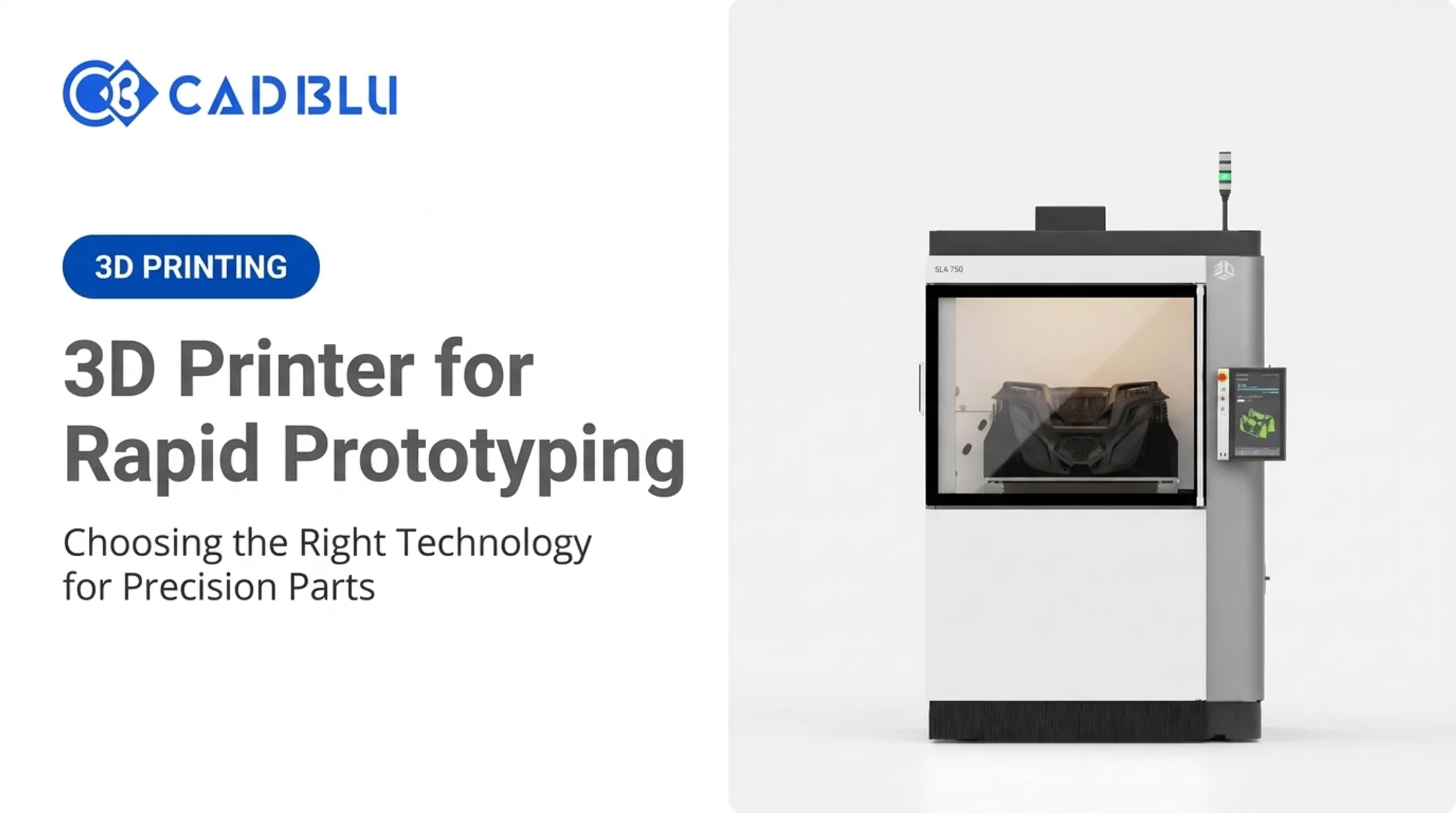
Industrial SLA systems cost far more: the SLA 750 runs about $360,000, while a compact production unit like the PSLA 270 sits closer to $115,000.
SLA's total cost adds up beyond the printer:
- Resin cartridges: Accura 2-liter cartridges run about $740, with 10 kg cartridges around $2,870
- Post-processing gear: wash stations, curing ovens, replacement vats, and vat film
- Consumables: 99% IPA, cleaning solution, and PPE for handling uncured resin
Compare full workflow cost per finished part—not printer sticker price alone.

Composition and Printing Method
FDM heats thermoplastic filament and deposits it through a nozzle, bead by bead, building each layer on top of the last. Common material families include PLA, ABS, PETG, nylon, TPU, and carbon-fiber-reinforced composites.
SLA selectively cures liquid photopolymer resin using a laser, projector, or masked light source. Resin behavior varies by formulation and printer ecosystem, ranging from rigid and castable to tough and high-temperature grades like the Accura family, which spans heat-deflection temperatures from 65°C to over 215°C.
Print Quality and Accuracy
FDM parts show visible layer lines, and feature size is limited by nozzle diameter. Thermal effects can cause warping, so calibration, orientation, and layer height all matter for accuracy.
SLA typically delivers finer detail and smoother surfaces. Systems like the ProJet 6000/7000 achieve accuracy of 0.001–0.002 inch per inch, with reproducible features down to 0.050 mm. Results still depend on the specific printer, resin, support strategy, and post-curing process.
Strength and Durability
Thermoplastic selection drives FDM strength. ABS-M30 offers roughly 30.8 MPa yield strength, while carbon-filled nylon options push past 70 MPa at break, according to Stratasys datasheets. Infill, wall thickness, and layer orientation all influence real-world performance.
SLA engineering resins are competitive on paper. Formlabs' Tough 2000 resin reports 40.4 MPa ultimate tensile strength and 79% elongation at break. Validate resin choice against long-term UV, heat, or chemical exposure for your application.
Workflow and Throughput
MSLA and DLP systems cure entire layers at once, so a full build plate of small parts can finish in nearly the same time as one part. FDM is often faster on simple, single parts but loses ground on batch throughput.
Post-processing widens the gap: SLA parts need washing, drying, and post-curing; FDM parts mainly need support removal.
What Is FDM 3D Printing?
Fused deposition modeling, sometimes called fused filament fabrication, builds parts by extruding melted thermoplastic through a heated nozzle, layer by layer, until the part is complete.
Why teams choose it:
- Accessible, widely available materials
- Scalable build volumes for larger parts
- Adjustable infill for weight and strength trade-offs
- Straightforward handling with minimal specialized training
Where it falls short:
- Anisotropic strength (parts are weaker along the layer direction)
- Visible layer lines affecting cosmetic finish
- Warping risk with certain thermoplastics
- Support removal and nozzle calibration add setup time
FDM Material Categories
FDM's material range covers general-purpose (PLA, ABS, PETG), engineering-grade (nylon, polycarbonate), flexible (TPU), and fiber-reinforced composites. Ultimaker's PP filament, for example, resists chemicals and electricity but isn't rated above 105°C or for food-contact use. Always verify drying requirements and enclosure needs before committing a material to production.
Use Cases of FDM
FDM fits naturally into:
- Early-stage concept models and large prototypes
- Fit checks and functional testing
- Manufacturing aids, jigs, and fixtures
- Low-volume replacement parts
Industrial manufacturers, aerospace teams, and automotive suppliers lean on it for exactly these jobs.
A well-documented example: Moog Aircraft Group replaced outsourced tool-steel CMM fixtures with FDM-printed alternatives on a Stratasys Fortus 380mc. Build time dropped to roughly 20 hours per fixture set, according to an independent TCT Magazine report.
Fixtures that previously cost more than $2,000 to produce were made for a few hundred dollars—the kind of lead-time and cost win FDM consistently delivers for tooling and fixtures.
What Is SLA 3D Printing?
Stereolithography uses a light source to selectively cure liquid photopolymer resin, building the part layer by layer inside a vat. Laser SLA scans a point at a time; projector-based DLP and masked SLA (MSLA) cure entire layers at once, which affects both speed and finish.
Key benefits:
- High feature resolution and fine detail
- Smooth surface finish straight off the printer
- Broad resin options for cosmetic, casting, dental, and specialty use
The SLA Workflow
Unlike FDM, SLA doesn't end when the print stops. The full sequence typically includes:
- Resin preparation and build-platform setup
- Support removal after printing
- Washing (often in IPA), drying, and post-curing

That workflow demands ventilation, PPE, a dedicated workspace, and some operator training, all of which add labor time that FDM largely skips.
Material and Performance Notes
SLA performance is resin-specific. Accura's material families range from rigid and tough/durable to clear/castable and high-temperature/composite.
3D Systems reports production-grade photopolymer resins tested for up to 8 years indoors and 1.5 years outdoors under ASTM methods, with surface quality comparable to injection-molded plastics.
Limitations still apply: support marks need cleanup, some formulations run brittle, and build volumes are often smaller or differently shaped than FDM systems.
Use Cases of SLA
SLA excels where surface finish and fine detail matter as much as fit:
- Detailed appearance models
- Jewelry patterns for investment casting
- Dental models
- Fine-feature prototypes
Accura Sapphire, for instance, is built specifically for high-resolution casting master patterns in jewelry manufacturing.
On the dental side, Smileep dental lab reported 60-80% higher productivity after adopting a Form 3B SLA printer, according to Formlabs, plus a clear gain in precision.
CAD BLU's dental, jewelry, and casting customers see similar workflow gains when SLA replaces manual pattern-making or subtractive processes.
FDM vs SLA: What Is Better?
Neither technology wins outright. "Better" depends on the part's purpose, required tolerance, production volume, and finishing budget.
Choose FDM when:
- You need a larger build volume
- Budget-conscious prototyping matters more than surface finish
- You need durable parts for jigs, fixtures, or load-bearing use
- Material storage and handling need to stay simple
Choose SLA when:
- Fine detail or a flawless surface is non-negotiable
- You're producing jewelry patterns, dental models, or casting masters
- Small, intricate geometry needs to hold tight tolerances
- Presentation-quality appearance matters as much as function
Speed and Cost, Compared Fairly
Print speed alone is misleading. A single SLA part might finish in under two hours on a Form 4, which Formlabs claims runs 2-5 times faster than its predecessor.
Factor in washing, curing, and support removal, and the "time to usable part" gap narrows. FDM often needs less post-processing time per part, but it loses ground on batch jobs where SLA's whole-layer curing shines.

Total cost of ownership should include:
- Printer acquisition and financing
- Materials and consumables per part
- Failed prints and rework
- Operator time for post-processing
- Workspace and ventilation requirements
Selection Checklist
Before buying either system, walk through:
- Part dimensions and smallest required feature
- Tolerance and fit requirements
- Mechanical loads, temperature, and chemical exposure
- Production quantity and repeatability needs
- Surface finish expectations
- Operator skill level and available training time
If the answer still isn't obvious, that's normal. CAD BLU works with U.S. organizations to evaluate commercial 3D printers, materials, software, and full workflows, including installation and OEM-certified repair support. The goal is a decision based on your actual parts, not a spec sheet comparison.
Real World Examples
Moog Aircraft Group is a clear FDM win on cost and lead time. Durable inspection fixtures that once took weeks and cost thousands were produced in-house in hours for a fraction of the price. Size, durability, and turnaround drove that decision, not detail resolution.
Smileep's dental lab tells the opposite story. Precision and surface quality mattered more than raw speed or part size. That is where SLA's resin-curing workflow pays off, even with the added washing and curing steps.
The takeaway: these technologies often work best as complements.
- Rough out fixtures and jigs on FDM
- Run jewelry casting patterns or dental models on SLA
- If your shop has both needs, you likely need both processes
Not sure which fits your production goals? Contact CAD BLU to talk through printer selection, materials, and workflow integration based on the parts you actually make.
Conclusion
FDM tends to be the practical choice for larger, durable, thermoplastic, or cost-sensitive parts. SLA generally wins when intricate detail, smooth finish, or precise casting and dental work matter most.
Neither claim holds universally, though. Printer model, resin or filament formulation, part orientation, and operator skill can all shift the outcome.
Before committing to either technology, test a representative sample part and total up the real workflow cost, not just the printer price. That's the comparison that actually predicts how the part performs in your shop.
Frequently Asked Questions
What is better, SLA or FDM for a 3D printer?
FDM fits larger, durable thermoplastic parts and cost-sensitive jobs. SLA fits fine detail, smooth surfaces, and precise small models. Choose based on part size, required finish, and budget.
What prints faster, FDM or resin?
Speed depends on printer type, part height, geometry, batch size, and post-processing. A small SLA part may print quickly, but washing and curing often extend total time to a finished part.
What is SLA, SLS, and FDM?
SLA cures liquid resin with light. FDM extrudes melted thermoplastic filament through a nozzle. SLS sinters powder with a laser and is a separate powder-based process from both.
Is SLS more accurate than FDM?
SLS often produces more consistent complex geometries and finer features than standard FDM. Actual accuracy still depends on the printer, material, and process settings.
What is the difference between SLA and SLS?
SLA cures liquid resin layer by layer and needs supports. SLS sinters powder that self-supports in the bed, so parts often suit functional use, while SLA favors fine detail and smooth finish.