Introduction
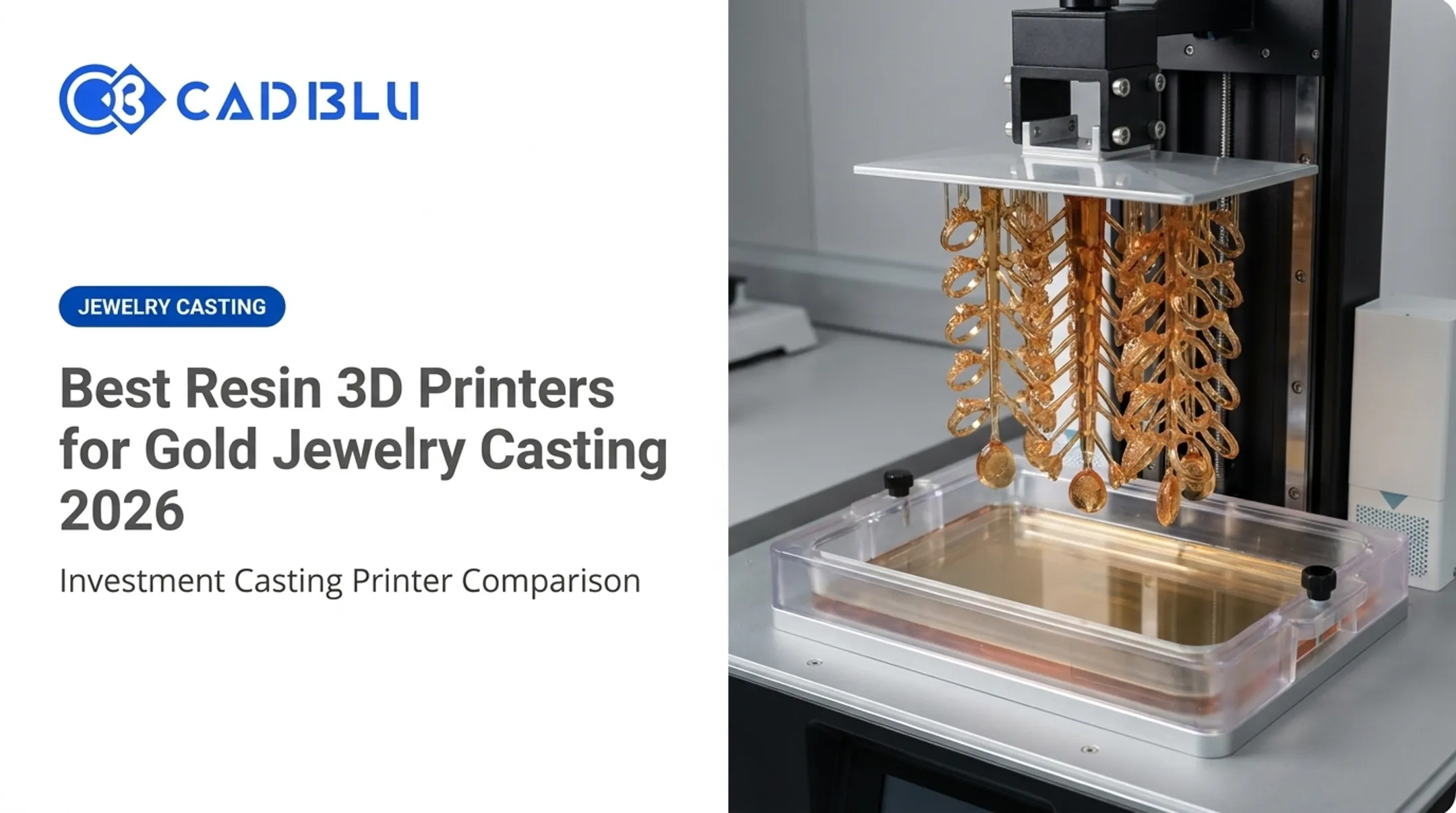
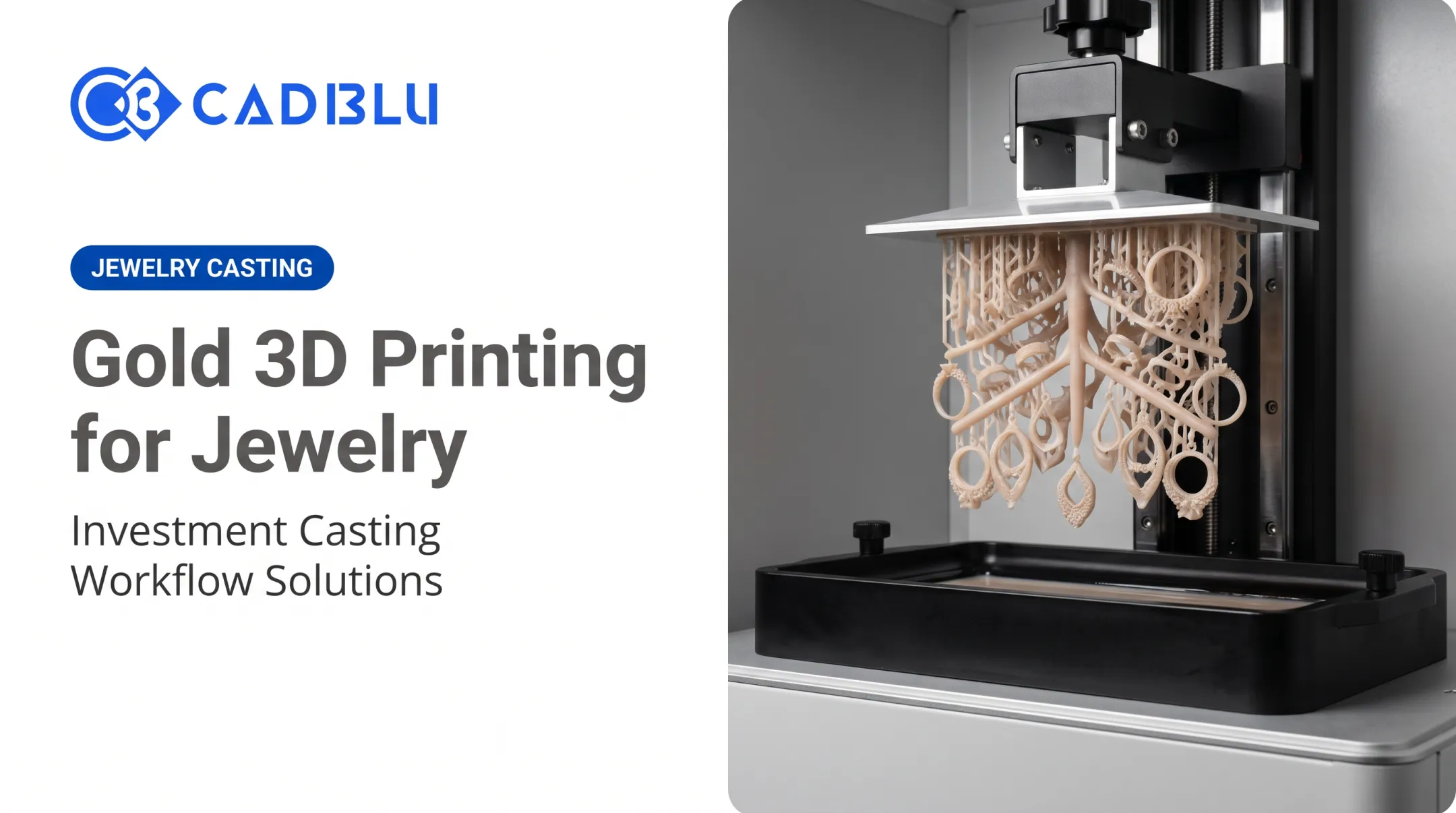
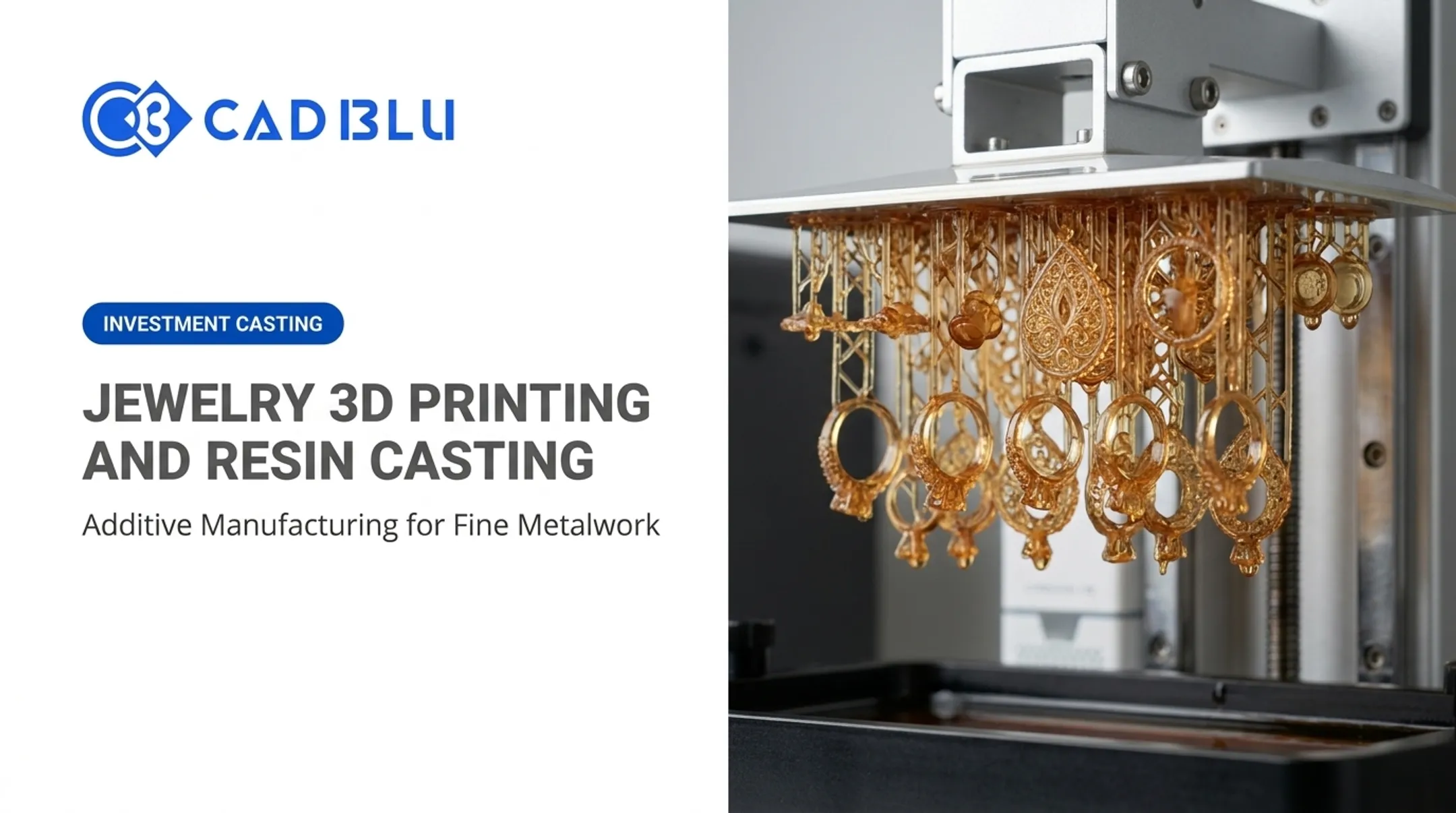
A "gold printer" isn't what most people picture. In nearly every jewelry workflow, it's a 3D printer that produces a castable wax or resin pattern, one that later gets replaced by molten gold through lost-wax casting. It doesn't deposit finished gold.
This distinction matters for US jewelry businesses, designers, goldsmiths, and investment casting teams. Get it wrong, and you'll invest in the wrong equipment, budget for the wrong finishing steps, or promise clients a turnaround your process can't deliver.
The term "gold printing" gets used loosely across the industry. It might mean direct metal additive manufacturing, castable pattern printing, or even decorative gold-colored surface printing that has nothing to do with real gold jewelry.
This article breaks down the digital jewelry workflow: material choices, printer options, casting stages, quality factors, common misconceptions, and situations where 3D printing simply isn't the right tool.
Key Takeaways
- Most gold jewelry starts as a 3D-printed wax or resin pattern, then goes through lost-wax casting
- Direct gold 3D printing exists, but needs specialized metal printers and heavy finishing
- MJP and DLP dominate pattern printing, with different trade-offs for detail and speed
- Full workflow quality—CAD prep, supports, burnout, and casting—matters more than printer resolution alone
What Is the Gold 3D Printing Process?
The phrase "gold printer" is misleading in almost every jewelry context. Ask ten people what it means, and you'll get three different answers.
Three Meanings You'll Encounter
- Direct metal printing — Gold alloy powder is fused layer by layer in specialized metal AM systems. Cooksongold's PRECIOUS M 080, for example, produced an 18-karat bangle for designer Towe Norlen with no casting step.
- Castable pattern printing — Wax or resin is printed first, then replaced by molten gold through lost-wax casting. This is how the overwhelming majority of printed jewelry gets made.
- Decorative gold-color printing — A visual metallic finish applied to a non-gold part. It looks the part but contains no actual gold jewelry component.
Direct Metal vs. Castable Pattern: How They Differ
The two paths diverge in equipment, output, and finishing. Direct metal systems fuse gold alloy powder into a finished part. Castable workflows print a sacrificial wax or resin pattern, then replace it with molten gold.
Within castable workflows, the Investment Casting Institute's 2022 white paper on additive manufacturing notes that material jetting (MJP) deposits wax droplets for investment casting, while DLP cures an entire photopolymer layer at once with a projector.
| Factor | Direct Metal Printing | Castable Pattern Printing |
|---|---|---|
| Equipment | Industrial metal AM systems | Desktop-to-industrial wax/resin printers |
| Output | Finished gold part | Sacrificial pattern for casting |
| Typical use | Rare, specialized designs | Standard jewelry production |
| Post-processing | Heavy surface finishing | Investment, burnout, casting, finishing |
For most jewelry businesses, castable pattern printing is the practical entry point. It works with existing casting equipment and skill sets already common in the trade.
Why the Gold 3D Printing Process Is Used in Jewelry and Gold Casting
Converting a CAD model into a physical pattern lets jewelry businesses produce complex forms, repeat designs, and one-off custom pieces without hand-carving every wax model.
Jewelry work puts four demands on the pattern that hand carving rarely hits all at once:
- Fine filigree and delicate openwork
- Repeatable accuracy across ring sizes
- Lightweight structures that still cast cleanly
- Precise stone-setting geometry that survives printing and casting
Hand carving struggles to deliver all four on every piece.
Digital workflows shorten the distance between a design revision and a physical sample. A goldsmith no longer needs to re-carve a wax model every time a client wants a tweak. One CAD file can generate a full ring-size run, with resizing handled as a software step rather than a manual re-carve.
A 3D Systems case study on Uptown Diamond, a Houston jeweler, shows the gap clearly. Their traditional design cycle ran two to three weeks, and championship-ring metal molds cost $4,000 to $7,000.
After adopting wax pattern printing, the shop produced up to 50 unique designs ready for casting in 10 hours. That figure is one company's documented result, not an industry average, but it shows how far the timeline can move.

Traditional lost-wax casting still matters here. The printer only creates the sacrificial pattern — casting is what actually forms the finished gold object.
3D printing isn't automatically the right call for every piece. If a design is simple, production volume is low, or an existing hand-carving or mold-based process already meets quality and cost targets, printing may add cost without adding value.
How the Gold 3D Printing and Casting Process Works
This is the path from digital design to finished gold jewelry, and where printing stops and casting takes over.
Step 1: Prepare and Validate the CAD Design
The process starts with a watertight, manufacturable 3D model. That means checking wall thickness, unsupported overhangs, stone-setting geometry, shrinkage allowances, and any areas that will need post-cast finishing.
Orientation and build-layout planning matter here too. How a piece sits on the build platform affects surface quality, where supports land, print time, and material use.
Step 2: Print the Castable Pattern
MJP and DLP systems build the pattern layer by layer, but they work differently.
- MJP (material jetting) deposits genuine wax, such as 3D Systems' VisiJet M2 CAST, into smooth patterns that melt on existing foundry schedules
- DLP cures castable photopolymer resin, such as Figure 4 JCAST-GRN 10, by exposing each full layer at once with a projector
MJP usually wins on surface quality and cleanup. DLP usually wins on speed and batch throughput when the resin is validated for casting.
Step 3: Remove Supports and Inspect the Pattern
Supports come off, the pattern gets cleaned, and someone checks dimensions and surface quality. Fine details like prongs and filigree are fragile at this stage. Damage here shows up permanently in the final casting.
Step 4: Assemble the Casting Tree and Invest the Pattern
Patterns get attached to a sprue system and arranged into a casting tree. Sprue placement and runner design must let molten gold flow in while gases escape. Get this wrong, and you get incomplete fills or trapped porosity later.
The assembled tree is then invested in a plaster-like material that hardens around it.
Step 5: Burn Out the Pattern and Cast the Gold
Heat removes the wax or resin from the invested mold, leaving a cavity that gets filled with the selected gold alloy.
BlueCast's 2025 burnout guidance notes that every resin-and-investment pair needs its own heating curve. There is no universal schedule. General reference points include:
- 110–140°C for preheat and wax removal
- 150–450°C for resin pyrolysis
- 450–740°C for peak carbon-residue removal
- At least one hour at casting temperature for thermal equilibrium
Incomplete burnout or a mismatched heating curve leaves ash or residue that shows up as surface defects and porosity in the casting.
Step 6: Finish and Inspect the Jewelry
Once cast, the piece gets divested, sprues cut off, and the surface polished. Stone setting, plating, and dimensional checks follow before final inspection.
The finished piece depends on the full chain, not printer resolution alone. A high-resolution print with a sloppy burnout still casts a flawed result.

Where the Process Is Applied and What Affects Results
Castable pattern printing shows up across a wide range of jewelry work:
- Custom engagement rings and one-off commissions
- Intricate geometry that's difficult or impossible to carve by hand
- Repeated jewelry styles and short production runs
- Prototypes for client approval before full production
- Design revisions during the concept-development stage
What Actually Drives the Outcome
A handful of variables determine whether a printed pattern casts cleanly:
- CAD geometry — wall thickness, tolerances, orientation, support strategy, sprue design
- Material properties — castability, ash/residue behavior, dimensional stability, storage handling
- Print settings — calibration, layer thickness, build conditions, post-processing tools
- Casting variables — investment material, burnout schedule, gold alloy, batch size
Those same variables shape which print technology fits the pattern.
Choosing Between MJP and DLP
MJP fits work where smooth patterns, complex forms, and easy support removal matter most. CAD BLU's ProJet MJP 2500W prints up to 25 wax rings in under three hours using 100% wax that needs no ash-free burnout adjustment.
DLP fits batch production and speed when the resin is validated for casting. Figure 4 Jewelry's projection-based system runs at 30-micron layer resolution and up to 4x the speed of comparable systems, but its castable resin needs a dedicated burnout ramp.

Evaluating printers, materials, and workflow integration on your own can eat weeks of trial and error. A full-service partner like CAD BLU covers printer selection, material validation, software setup, installation, and ongoing technical support so jewelry businesses can avoid costly test batches.
Common Issues and Misconceptions
Misconception #1: A desktop 3D printer can feed gold into a nozzle and print finished jewelry. It can't.
Consumer FDM printers extrude plastic filament. Castable pattern printers extrude or cure wax and resin. Only industrial metal additive systems handle actual gold alloy, and those are a different category of equipment entirely.
Misconception #2: High resolution alone guarantees a successful cast.
Resolution only controls surface detail on the pattern. Design preparation, support strategy, burnout accuracy, investment quality, and alloy behavior all shape the final result independently.
Where Failures Actually Come From
| Symptom | Common cause |
|---|---|
| Porosity | Thin, misplaced, or too-long sprues; insufficient burnout |
| Incomplete fill | Turbulence from poor spruing; inadequate gating |
| Rough surface | Improper spruing; wrong investment water-to-powder ratio |
| Orange-peel texture | Excessive metal or flask temperature |
A pattern defect (a broken prong, warped wax, missed support point) traces back to printing or handling before investment. A casting defect (porosity, incomplete fill, rough texture) traces back to burnout, investment, or the pour itself.
Knowing which is which tells you where to start troubleshooting.

Recommended troubleshooting sequence:
- Review the CAD model for wall thickness and geometry errors
- Inspect the printed pattern for damage or incomplete support removal
- Verify material selection and burnout settings match the technical data sheet
- Check investment mixing and casting variables
- Assess finishing operations for evidence of earlier-stage problems
When the Gold 3D Printing Process May Not Be Appropriate
Printing isn't always the right call. Sometimes conventional wax work, CNC machining, or outsourcing beats printing a pattern.
Situations where it may not add value:
- Simple geometries a skilled carver produces just as fast by hand
- High-volume runs where rubber-mold tooling already beats print cost per piece
- Designs that don't suit any validated castable material
- Shops without post-processing capacity for washing, curing, and inspection
- Limited quality-control resources to catch pattern defects before investment
Direct gold metal printing is usually overkill for a jewelry business that just needs economical castable patterns. That category of equipment is built for a different problem: hollow forms or ultra-thin geometries that can't be cast conventionally at all.
One warning sign: If a business chooses equipment based purely on the marketing term "gold printing," it's likely solving the wrong problem. Alloy compatibility, casting method, pattern material, finishing needs, and total cost of ownership matter more than the label.
Before committing to new equipment or materials, test the complete workflow with representative designs and sample casts. A pattern that prints beautifully but casts poorly hasn't solved anything.
Conclusion
The most common meaning of "gold printing" in jewelry is the production of a wax or resin pattern that feeds into lost-wax casting.
Understanding the full digital-to-casting workflow, not just the printer spec sheet, helps a jewelry business choose technology based on actual design requirements, production volume, surface expectations, and support needs.
CAD BLU works with jewelry businesses and investment casting teams across the US to supply printers, materials, software, installation, and repair services for this workflow.
Before adopting a gold-printing process for your shop, test it with a real design and a full sample cast. The finished piece, not the spec sheet, tells you whether it works.
Frequently Asked Questions
Can a 3D printer print gold?
Specialized metal 3D printers can produce gold or gold-alloy parts in specific applications. Most jewelry businesses print castable wax or resin patterns, then cast them in gold with lost-wax casting.
What is gold printing called?
There's no single standard term. It can mean direct metal additive manufacturing, castable pattern printing followed by lost-wax casting, or decorative gold-color printing. "Gold printer" is used loosely across the industry.
Is 3D printing used for gold jewelry?
Yes. CAD designs are printed as castable patterns for rings, pendants, custom pieces, prototypes, and production batches, then cast into gold and finished by hand.
What material is used to 3D print jewelry for casting?
Two main categories: castable wax (like VisiJet M2 CAST) and certified castable resin (like Figure 4 JCAST-GRN 10). Low-residue burnout matters because leftover ash or resin causes casting defects.
Which is better for jewelry casting, MJP or DLP?
It depends on your priorities. MJP tends to favor smooth surfaces and easy support removal; DLP tends to favor speed and batch throughput, provided the resin is validated for casting rather than general use.
What can cause a 3D-printed jewelry pattern to fail during gold casting?
Common culprits include CAD design errors, damaged patterns, poor support removal, incomplete burnout, incorrect sprue placement, and investment mixing errors. Working through the pattern first, then the casting variables, usually isolates the cause.