That precision comes at a cost. Material jetting is a broad technology category, and PolyJet — Stratasys's branded implementation — is only one variant. NanoParticle Jetting (NPJ) and MultiJet Printing (MJP) systems use different architectures, materials, and pricing models entirely.
This article breaks down current US pricing, what drives total ownership cost, and how to decide whether buying, outsourcing, or choosing a different technology makes the most financial sense for your application.
Key Takeaways
- Compact professional systems start near $55,700; dental and industrial platforms run $64,700–$360,000+
- Materials, support removal, service plans, and labor add major cost beyond the printer invoice
- Color, multi-material, and medical/dental workflows justify higher spend when the application demands them
- Occasional use or standard materials often make SLA or outsourced printing the better financial choice
How Much Does a Material Jetting 3D Printer Cost? (Pricing Overview)
Material jetting pricing spans compact professional systems, large-format PolyJet platforms, dental-specific machines, and industrial NanoParticle Jetting systems—each built for a different job. Current US pricing by tier:
| Tier | Example Systems (Approx. Price) | Best Suited For |
|---|---|---|
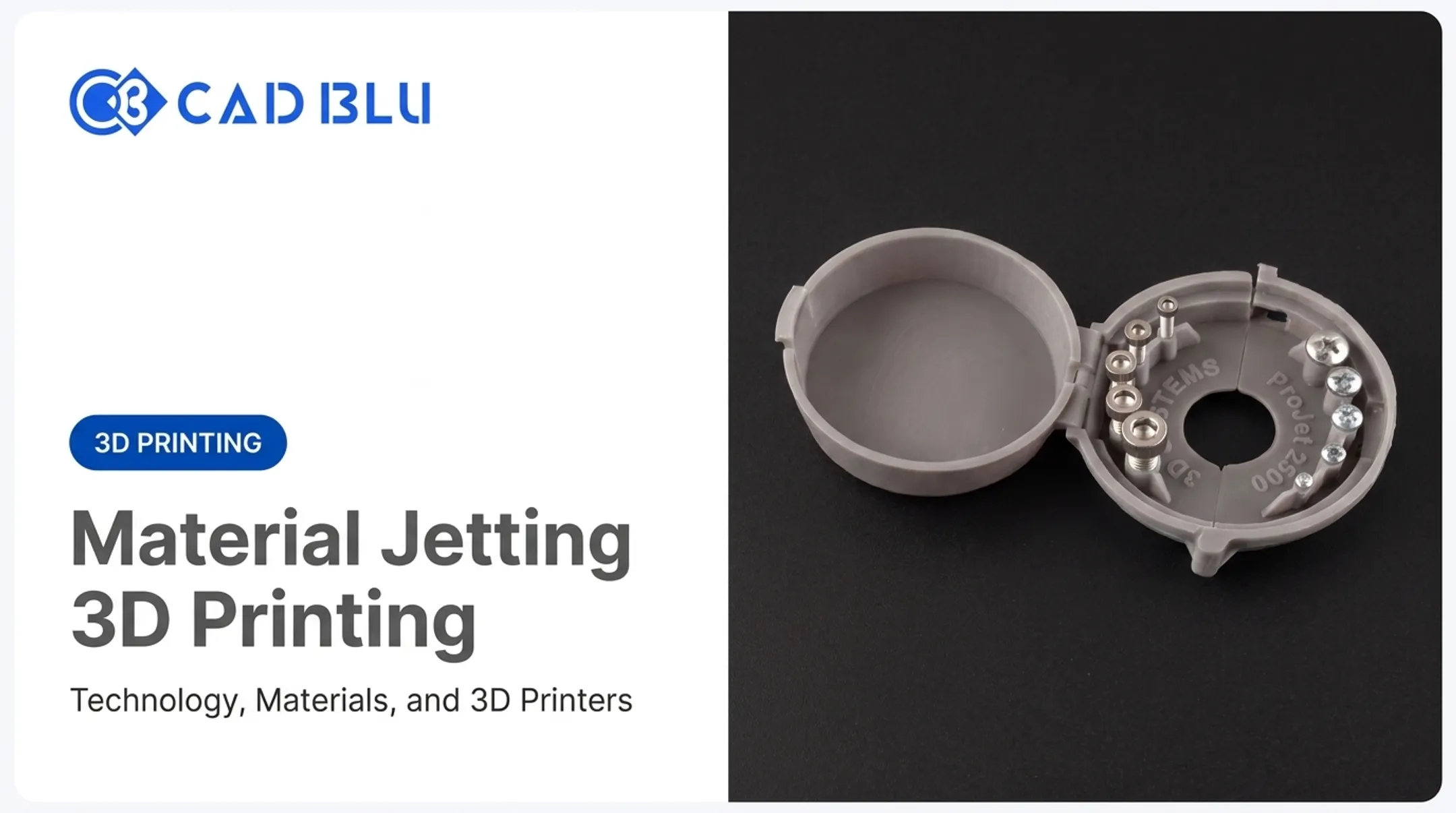
| Compact/Professional | ProJet MJP 2500 Plus (~$55,700) | Prototypes, dental thermoforming models, jewelry patterns |
| Mid-range Commercial | ProJet MJP 300W Plus ( |
Casting patterns, jewelry production, bridge manufacturing |
| Specialized Dental | NextDent 300 (~$72,000) | Batch denture production, monolithic dental models |
| Large-format/Industrial | PolyJet platforms ($20,000–$500,000+) | Full-color, multi-material prototypes, product design reviews |
Typically included:
- Printer, standard printheads, and print-client software (such as 3D Sprint)
- Basic training
Usually excluded:
- Installation labor and extended service contracts
- Starter material bundles beyond a trial supply
- Post-processing accessories such as automated cleaning systems
According to Formlabs' comparison of SLA and PolyJet technology, PolyJet machines range from $20,000 to $500,000+, and mandatory service plans can run as high as 20% of the printer price annually. That service commitment matters as much as the sticker price.
On the industrial end, VoxelMatters reports the XJet Carmel 1400 NanoParticle Jetting system at roughly $750,000, reflecting the jump in cost when you move into metal and ceramic jetting.
Why the Premium Over SLA?
SLA resin printers generally start much lower. Compact and mid-size SLA systems often land in the $2,000 to $25,000 range depending on build size and automation. Material jetting costs more because it adds simultaneous multi-material printheads, color mixing, and finer resolution SLA cannot match. Pay the premium only when multi-material builds, full color, or that resolution level are core to your workflow.

A word of caution: an unusually low advertised material jetting price is often a printer-only quote, a base configuration without printheads or software, or a used/refurbished unit. Always confirm what's included before comparing numbers across vendors.
Key Factors That Affect Material Jetting Printer Cost
Printer price rises with capability: more materials, more channels, more automation, and higher throughput. Here's what actually drives the number on the quote.
Printer Type, Configuration, and Brand Ecosystem
PolyJet, MJP, and NPJ systems differ in architecture and compatible materials:
- Stratasys PolyJet jets liquid photopolymer and cures it instantly with UV light
- 3D Systems MJP uses piezo printheads to deposit photocurable resin or wax
- XJet NPJ uses industrial inkjet architecture with dispersion inks for metal and ceramic printing
Each vendor runs a controlled material ecosystem. That means:
- Validated settings tied to branded materials
- Limited (or no) third-party material use without written confirmation
- Higher predictability, but less flexibility on cost
Verify each manufacturer's current terminology and lineup before comparing quotes — naming conventions shift as product lines update.
Build Volume and Throughput
A larger build chamber and more printheads raise the purchase price but can lower cost per part when the platform runs full builds consistently. The ProJet MJP 2500 Plus, for example, has a build envelope of 295 × 211 × 142 mm — plenty for dental models and jewelry patterns, but limiting for larger production runs.
Before paying for extra capacity, map out:
- Actual part dimensions and typical batch sizes
- Nesting efficiency for your geometry
- Realistic monthly utilization, not theoretical maximum
Resolution, Accuracy, Color, and Multi-Material Capability
Finer resolution and multi-material printheads add both hardware and software complexity. The MJP 300W offers modes ranging from 8 to 25 microns depending on speed versus detail priorities. PolyJet's J850 Prime can jet seven resins simultaneously, producing over 600,000 color combinations.
These features matter for realistic product prototypes, anatomical models, and dental workflows. They add little value when parts only need to be functional and dimensionally accurate.
Materials and Support Requirements
Model and support material are recurring costs that add up fast. Based on CAD BLU's catalog pricing, representative material costs include:
- M2 SUP support material — $221 per 1.4 kg bottle
- S300 support material — $404 per 2.0 kg bottle
- M3 Hi-Cast material — $1,167 per 1.75 kg bottle
- M2R series plastics (clear, tan, white, gray) — around $473 per 1.5 kg bottle
All3DP's 2023 PolyJet guide cites model material averaging about $400 per kilogram industry-wide. Actual costs still vary by material family and support strategy.
Waste from failed prints, part geometry, and support removal all affect real consumption. Budget for more material than the theoretical part volume suggests.
Automation, Post-Processing, and Workflow Integration
Features like automated material loading, support removal systems, and cloud-based monitoring raise upfront cost but reduce labor. The MJP 2500 Plus's optional EasyClean system removes eco-friendly wax supports without manual grinding or polishing — a real time-saver at scale.
A complete quote should list every required accessory. Treating the printer as a standalone purchase almost always understates the real budget.
Service, Maintenance, Training, and Reliability
Service plans vary in coverage. 3D Systems offers tiers including Preventative Maintenance Plus, Standard, Premiere, and Elite, with after-hours support and spare-part coverage reserved for higher tiers. Stratasys includes a complimentary first-year warranty, with preventive maintenance recommended every two years or 3,500 printing hours for J-series machines.

OEM-trained support affects practical value more than most buyers expect. CAD BLU's technicians are OEM-trained and certified, with onsite service, remote support, and spare-parts-only options available when you compare total cost of ownership.
Material Jetting Total Cost Breakdown and Value Comparison
The purchase price is one number. Total cost of ownership is the number that actually determines whether the investment pays off.
| Cost Category | Timing | What's Included |
|---|---|---|
| Acquisition & installation | One-time, some recurring onboarding | Printer, printheads, delivery, calibration, software, training, site prep |
| Materials & consumables | Recurring | Model/support material, cleaning fluids, trays, waste handling |
| Labor & operator time | Recurring | Setup, monitoring, support removal, washing, QC checks |
| Maintenance & service | Recurring/periodic | Preventive maintenance, contracts, parts, printhead care, downtime cost |
| Facility & compliance | One-time and recurring | Space, ventilation, power, PPE, hazardous waste disposal, certifications |
Facility requirements are easy to underestimate. MJP 300W systems need a dedicated 100–127 VAC, 15A (or 200–240 VAC, 10A) circuit, plus clearance for airflow and service access. Materials like VisiJet DP200 require hazardous-waste disposal, local exhaust ventilation, and nitrile gloves, safety glasses, and closed-toe shoes as standard PPE.
Low-Cost vs. High-Cost Systems
Lower-cost and higher-cost systems serve different production profiles:
- Lower-cost systems trade build volume, color channels, and automation — a fit for occasional prototyping or single-material dental models where speed and sticker price matter more than visual realism
- Higher-cost systems earn the premium with larger builds, simultaneous multi-material output, and less outsourcing; a jewelry shop running daily casting patterns can cut material waste by up to 50% and speed output by up to 30% on an MJP 300W Plus, savings that compound over hundreds of builds
Judge value by cost per usable part, not cost per printed part. Include:
- Failed builds and scrap rate
- Support removal and finishing labor
- Downtime and service interruptions
A cheaper printer that yields more scrapped parts is not actually cheaper.
How to Estimate the Right Budget — and Avoid Common Cost Mistakes
Start with fit, not price. Define your application, required material properties, part size, finish, color needs, accuracy tolerance, and expected monthly volume before requesting quotes.
Once those requirements are clear, build a quote checklist covering:
- Printer configuration, printheads, and software licensing
- Installation, calibration, and operator training
- Starter materials and ongoing consumable pricing
- Post-processing equipment (cleaning systems, cure units)
- Service plan tier, warranty terms, and response times
- Facility work, shipping, and applicable taxes
A Simple ROI Model
Compare your current outsourcing or manual-modeling cost against the expected in-house cost per usable part. Factor in labor saved, shorter lead times, and any revenue from faster iteration or new material capabilities.
Then run the numbers:
- Calculate fully loaded acquisition cost (printer, install, training, post-processing, facility work)
- Estimate realistic annual savings versus outsourcing or manual methods
- Divide acquisition cost by annual savings to get payback period
- Stress-test conservative, expected, and high-utilization scenarios

If payback stretches past two or three years under conservative assumptions, outsourcing may be the smarter near-term move.
Outsourcing still tends to win when:
- Usage is occasional or demand is unpredictable
- You need specialized materials you'd rarely reuse
- Facility space or operator expertise is limited
- Avoiding capital expenditure matters more than speed
Commonly Missed Expenses
- Mandatory service contracts and proprietary material costs beyond the sticker price
- Color or large-build options the workflow rarely uses
- Post-processing time, failed prints, and material waste
- Accuracy or finish shortfalls on low-cost systems that don't meet application requirements
If you're matching configurations to real production needs, CAD BLU reviews applications, parts, materials, and facility constraints so the quote reflects workflow requirements—not just printer price. Request a configuration review.
Conclusion
Material jetting prices vary this widely because the technology bundles precision hardware, specialized materials, color and multi-material capability, software, and service into one purchase. A $55,700 professional system and a $360,000 industrial platform solve very different problems.
The right investment is the configuration that matches your application, keeps cost per usable part in check, and delivers a return you can actually measure.
Frequently Asked Questions
How much does PolyJet 3D printing cost?
Current PolyJet system prices range from roughly $20,000 to $500,000+, depending on build size, printhead count, and color/multi-material features. Quotes often exclude service contracts, which can add up to 20% of the printer price annually.
What is material jetting in 3D printing technology?
Material jetting deposits droplets of liquid material layer by layer, typically curing them instantly with UV light. It produces highly detailed, smooth parts and can support color or multiple materials in a single build.
What is the difference between PolyJet and material jetting?
Material jetting is the broader process family; PolyJet is Stratasys's specific branded implementation of it. Other systems, like 3D Systems' MJP or XJet's NPJ, use different materials, architectures, and pricing models.
Is material jetting more expensive than SLA?
Generally, yes. SLA systems often start under $10,000, while many commercial material jetting systems start near $50,000 and climb from there—though some configurations price lower. The premium is often worth it when you need color, multi-material parts, or a fine surface finish.
What costs should be included when buying a material jetting 3D printer?
Beyond the printer itself, budget for:
- Installation, software, and training
- Service plans and ongoing maintenance
- Model and support materials
- Post-processing equipment and labor
- Facility modifications and downtime costs