Many buyers researching this technology run into a wall of confusing acronyms. MJP and MJF sound almost identical but work in completely different ways. MJP jets and cures liquid photopolymer or wax droplets, while Multi Jet Fusion fuses polymer powder using agents and thermal energy. Mixing them up leads to the wrong purchase.
This article breaks down how MJP actually works, what materials and machines are available, where the technology shines, where it falls short, and what to check before you sign a purchase order.
Key Takeaways
- MJP printers build parts by jetting photopolymer or wax droplets, then curing each layer with UV light.
- You get fine detail, smooth surfaces, and castable patterns suited to jewelry, dental, and prototyping work.
- Match materials, build volume, support removal, software, and total ownership cost to your application.
- Do not equate MJP with MJF; compare material options, part strength, and production volume instead of the acronym.
What Is MJP 3D Printing?
MultiJet Printing is a material-jetting additive manufacturing process. Printheads deposit tiny droplets of build material and support material onto a platform, layer after layer, until the part is finished.
3D Systems, the company that coined the MJP name, describes layer thicknesses as fine as 16 microns and accuracy that can rival stereolithography for many applications, according to 3D Systems' MultiJet Printing technology page. Available materials depend on the printer model. Some machines run UV-curable photopolymers, others run 100% castable wax, and a few handle both.
Photopolymers, Wax, and the PolyJet Confusion
MJP is 3D Systems' proprietary brand name. PolyJet is a separate, unrelated brand name used by Stratasys for its own material-jetting technology. Both jet and UV-cure photopolymer droplets, but the terms aren't interchangeable. Material libraries, color options, and machine specs differ. Don't assume a PolyJet spec sheet applies to an MJP printer, or vice versa.
Because material sets and machine specs differ by model, MJP systems typically produce:
- Detailed prototypes and functional test parts
- Dental models, wax-ups, and surgical guides
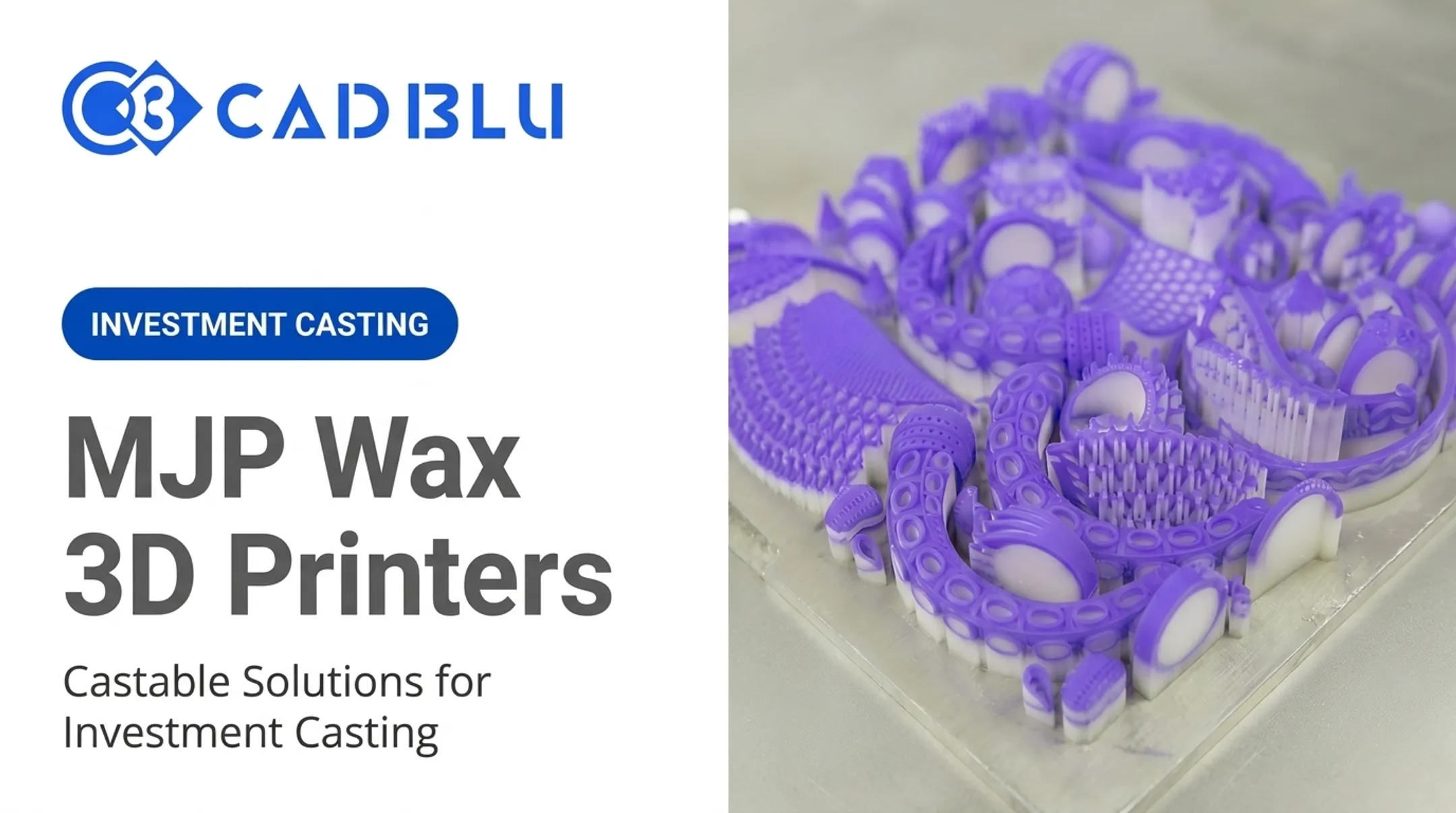
- Jewelry casting patterns and investment-casting patterns
- Molds and tooling masters
- Small precision components where surface finish matters
Representative MJP Printer Specifications
Specs vary significantly by model. Current ProJet MJP systems include:
| Model | Build Volume | Layer/Resolution | Materials |
|---|---|---|---|
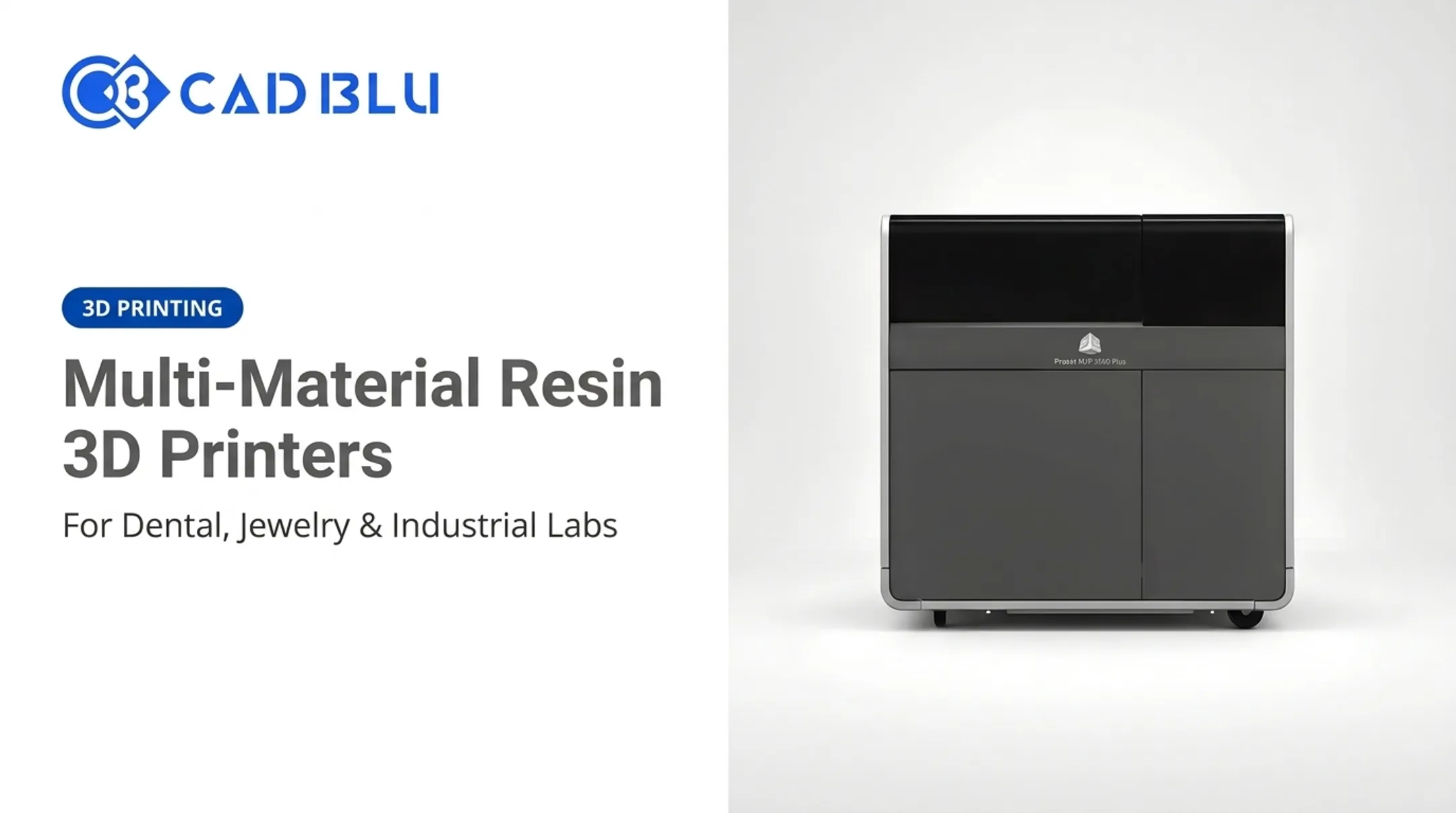
| ProJet MJP 2500 | 295 × 211 × 142 mm | 32 μm; 800×900×790 DPI | Rigid white and black plastic |
| ProJet MJP 2500 Plus | 294 × 211 × 144 mm | Feature detail to 300 μm | Rigid, elastomeric, biocompatible |
| ProJet MJP 2500W | 294 × 211 × 144 mm | 16 μm; 1,200×1,200×1,600 DPI | 100% wax (VisiJet M2 CAST) |
| ProJet MJP 300W Plus | 294 × 211 × 144 mm | 8–16 μm layer modes | 100% wax casting patterns |
| ProJet MJP 2500 Plus Dental | 294 × 211 × 144 mm | 32 μm; ±50 μm on 80% of surfaces | VisiJet M2R-TN tan resin |
How MJP Works and What It Produces
The workflow is consistent across most MJP systems, even though material and support choices vary.
- Prepare and orient the model in software such as 3D Systems' 3DSprint, then slice it into hundreds of thin layers.
- Assign build and support materials — a rigid resin, elastomer, or wax for the part, and a dissolvable or meltable material for support.
- Jet and cure each layer. Piezo printheads deposit droplets, and UV lamps solidify the photopolymer instantly (wax layers set as they cool).
- Repeat until the full part or batch of parts is complete.

Supports do critical work during the build. They hold up overhangs, fill internal cavities, and stabilize delicate features—thin dental margins, filigree jewelry details—that would otherwise slump or break.
Removing Supports Without Damaging the Part
Support removal depends on the machine and material:
- Melting — hot plates release wax-supported parts, typically in the 175-195°F range
- Dissolving — ultrasonic baths with isopropyl alcohol dissolve certain support waxes
- Automated systems — the MJP EasyClean system strips supports in under 30 minutes without manual labor
One Workflow, Three Very Different Outputs
The same basic MJP process produces very different results depending on the job:
- Jewelry casting pattern: Printed in 100% wax, batch-cleaned, then dropped straight into a flask for investment casting — no intermediate part exists.
- Dental model: Printed in a rigid tan resin, cleaned, then used directly for thermoforming or model work at the clinical accuracy level the case requires.
- Product prototype: Printed in rigid or elastomeric plastic, supports removed, then sanded, painted, or assembled for design review.
Precise droplet placement and thin layers let MJP hold sharp text, fine threads, and crisp edges that coarser layer processes often soften. Even so, parts still need cleaning, surface inspection, and a dimensional check before casting, painting, or assembly—especially when those fine features are load-bearing or go straight into a mold.
MJP Benefits, Applications, and Limitations
Where MJP Delivers Value
- Fine feature detail — sharp edges and legible small text straight off the platform
- Smooth surfaces — less post-processing sanding compared to many other technologies
- Complex geometry — internal channels and delicate features are achievable with support material
- Fast iteration — same-day or overnight turnaround on design revisions
- Specialized casting materials — dedicated wax formulations built for foundry work
Applications by Industry
- Jewelry and investment casting: Direct-cast wax patterns replace weeks of tooling with a same-week turnaround
- Dental and medical modeling: Wax-ups, crown-and-bridge models, surgical guides, and denture models
- Product design: Concept models and form-and-fit testing before committing to production tooling
- Aerospace and industrial: Visual and fit-check models ahead of full production runs
- Education and research: Teaching models and low-volume research prototypes
What to Verify With Wax and Castable Materials
VisiJet M2 CAST, a 100% wax MJP material, melts at 61–66°C with roughly 2% volumetric shrinkage and under 0.05% ash content. Those figures matter to a foundry deciding whether a pattern will burn out cleanly. Before committing to any castable MJP workflow, confirm:
- Burnout behavior and ash residue with your specific foundry
- Dimensional stability through the casting cycle
- Compatibility with your existing investment-casting process
A Finnish jewelry manufacturer using a ProJet MJP 2500W with pure-wax material reported producing 60 to 100 wax parts in four hours, cutting lead times from weeks to days, according to a 3D Systems customer story. Results like that make MJP attractive for casting-heavy operations, though output still depends on geometry and shop workflow.
Trade-Offs Worth Weighing
MJP isn't the right fit for every job:
- Equipment and proprietary material costs run higher than entry-level filament printers
- Material choices are narrower than powder-bed or filament systems
- Support material consumption adds ongoing cost
- Post-processing (cleaning, curing, inspection) takes real time
For large parts, high-volume production, or applications that need broad engineering thermoplastic performance, another process (MJF, SLS, or FDM) is often a better economic fit.
MJP Compared With Other 3D Printing Technologies
Buyers frequently ask how MJP stacks up against the alternatives. Here's the short version.
| Technology | Core Process | Best For |
|---|---|---|
| MJP | Jets and UV-cures photopolymer or wax droplets | Fine detail, casting patterns, dental models |
| PolyJet | Stratasys' own material-jetting process; jets and cures photopolymer | Full-color, multi-material parts (verify by model) |
| MJF | Fuses polymer powder with agents and thermal energy | Stronger functional parts, higher volume |
| SLA/DLP | Laser or projector cures liquid resin in a vat | High-resolution resin parts, similar detail level to MJP |
| FDM | Extrudes and layers melted thermoplastic filament | Low-cost prototyping, larger simple parts |
| SLS | Laser sinters polymer powder | Durable, isotropic functional parts |
PolyJet is Stratasys' material-jetting line and is often positioned for multi-material or full-color builds, according to Stratasys' PolyJet technology page. The jetting principle is close to MJP, but material libraries and machine limits vary by brand and model—always judge the specific printer, not the category label alone.
How the other processes trade off against MJP:
- MJF: Stronger, more production-ready thermoplastics from powder; typically less refined surface finish than MJP
- SLA/DLP: Similar detail and finish via a resin vat instead of a jetting printhead
- FDM: Lower equipment cost for simple or larger parts; coarser resolution
- SLS: Tougher, isotropic powder parts at higher volume; different post-processing path
Decision rule: Choose MJP when fine detail, smooth surfaces, and wax or photopolymer patterns matter most. Look elsewhere for powder-based production strength, larger envelopes, or lower equipment cost.
How to Choose an MJP 3D Printer
Start With Your Application
Before comparing machines, nail down:
- Part dimensions and required tolerances
- Smallest feature size you need to hold
- Surface finish and color requirements
- Casting or regulatory requirements (biocompatibility, for example)
- Expected production volume
Evaluate the Whole System
The printer is only one piece. Also weigh:
- Build and support material costs and cartridge handling
- Software for file prep, nesting, and job management
- Post-processing equipment and required workspace/ventilation
- Operator training needs
Calculate True Ownership Cost
Printer price alone is misleading. A ProJet MJP 2500IC lists at $69,000, and a ProJet MJP 300W Plus lists at $64,700. Total cost also covers materials, support wax, software, installation, maintenance contracts, and training.

Ask vendors for sample-part testing on your own geometry, with documented tolerances and support-removal guidance, before you commit.
CAD BLU helps organizations evaluate commercial 3D printers, materials, software, and installation for dental, jewelry, medical, and industrial workflows. OEM-trained technicians handle service and repair. If you are comparing MJP models, confirm current availability and compatibility with CAD BLU before you buy.
Before you sign, verify:
- Service response times and technician training
- Spare-parts availability and warranty terms
- Software update frequency
- Operator training included with purchase
Frequently Asked Questions
How much does an MJP 3D printer cost?
Commercial MultiJet systems often land in the mid five figures to low six figures, depending on build volume, materials, and software. Get a current quote for the configuration you need rather than relying on a generic list price.
What is MultiJet (MJP) 3D printing?
MJP jets micro-droplets of photopolymer or wax and cures each layer with UV light. It produces high-resolution parts with smooth surfaces for prototypes, dental models, and casting patterns.
What materials can MJP printers use?
Printers support rigid, flexible, and transparent photopolymers plus castable waxes. Pick materials based on visual models, functional prototypes, or patterns for jewelry and investment casting.
Is MJP a good fit for jewelry and casting?
Yes. Castable wax and specialty resins print fine-detail patterns with clean burnout. That makes MJP a strong option for jewelry, dental frameworks, and investment casting workflows.
How does MJP compare to SLA?
Both use photopolymers for high detail. MJP jets and UV-cures droplets and can support multi-material or wax builds; SLA cures resin in a vat and is often chosen for larger single-material parts.