Introduction
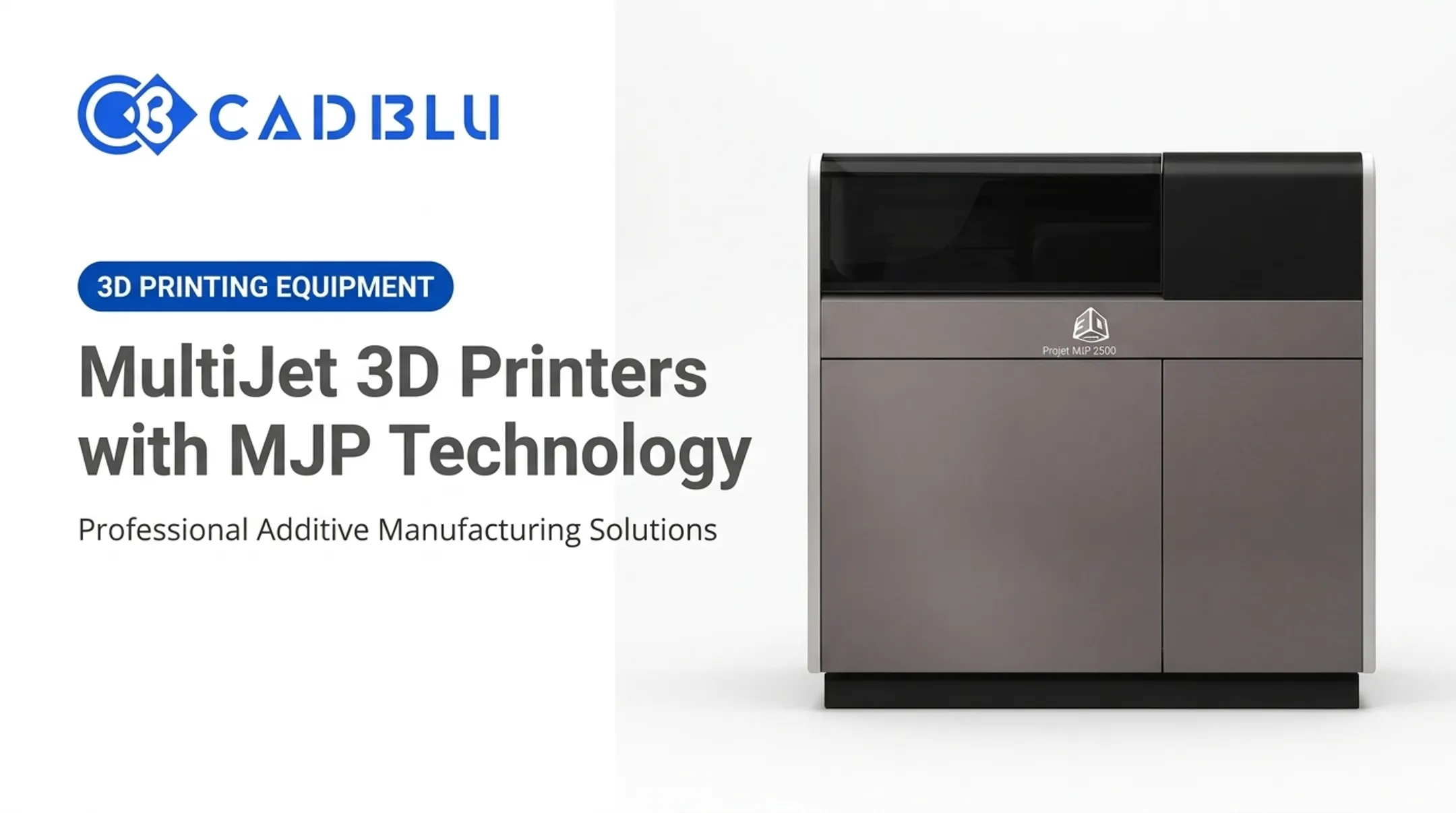
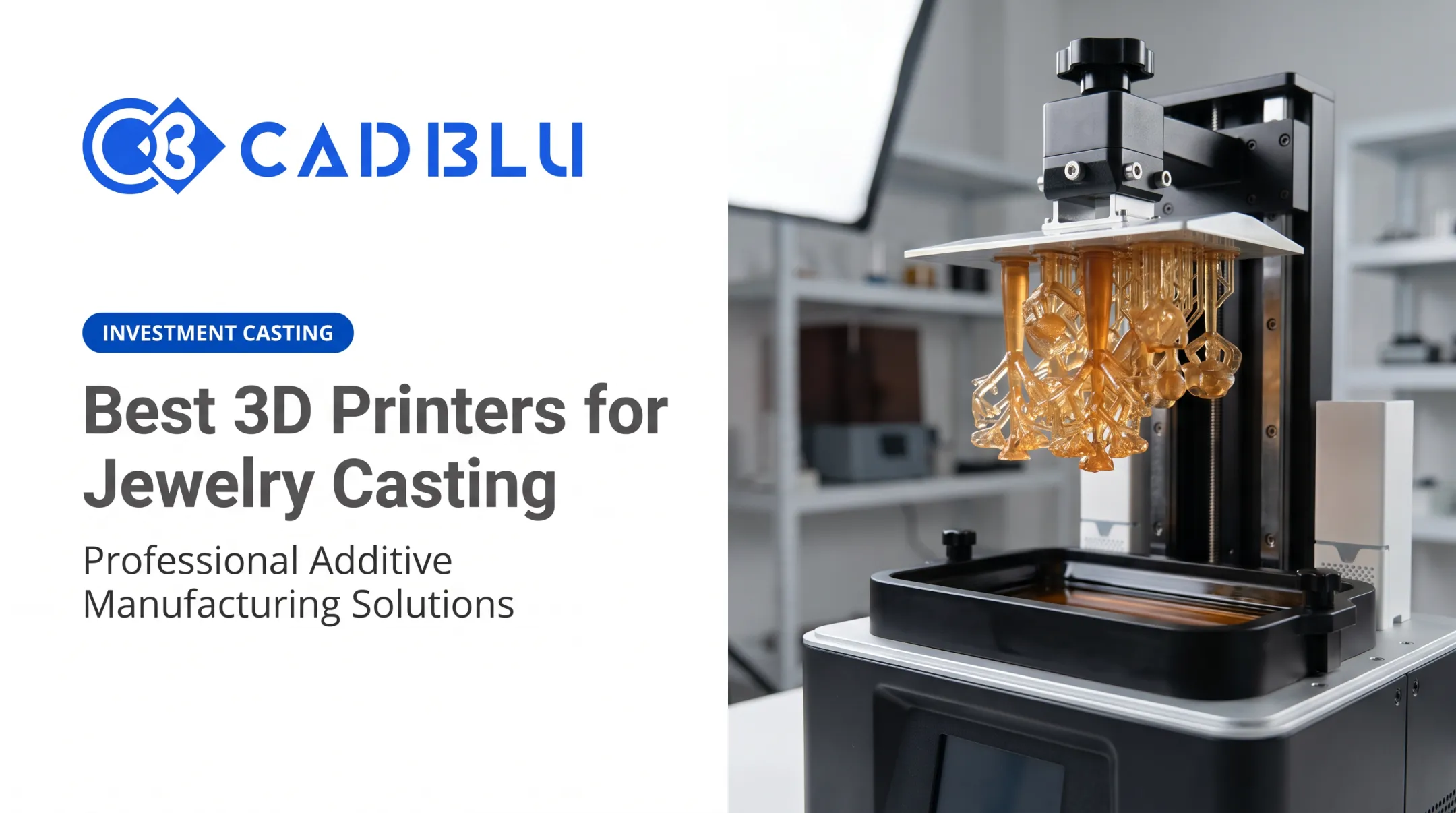
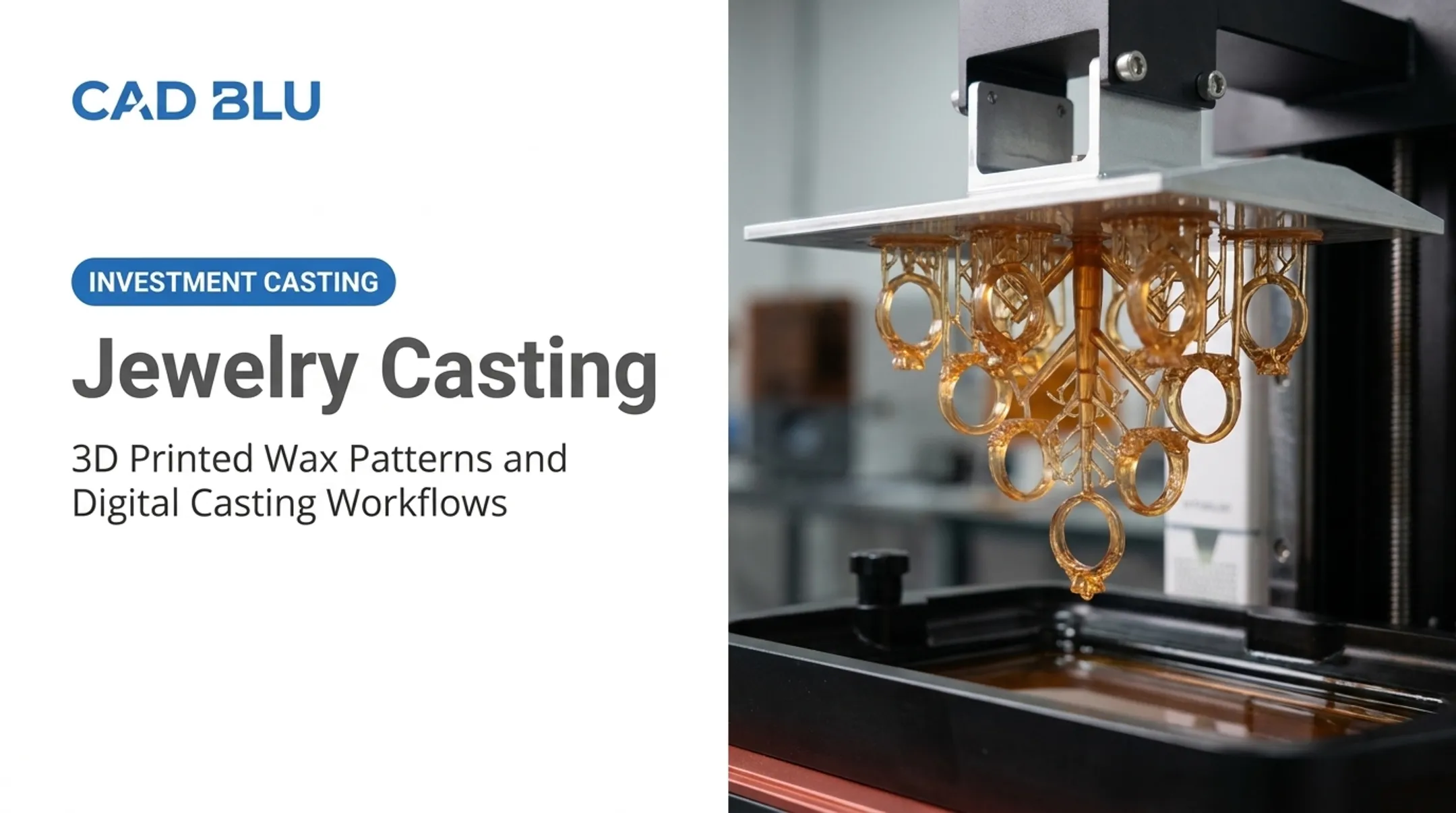
MJP wax 3D printers create detailed, castable wax patterns directly from digital CAD files. For jewelry manufacturers and investment casters, that means rings, pendants, and bridal pieces move from screen to shell without hand-carving a single wax model.
Traditional patternmaking has real limits. Manual wax carving caps design complexity, adds labor hours, and slows down custom or short-run orders. Choosing a printer isn't as simple as comparing resolution numbers on a spec sheet, either.
This article covers how MultiJet Printing works and how it fits into the lost-wax casting workflow. You'll also find common applications, the features worth researching before you buy, and how a hands-on additive manufacturing partner can help you avoid costly missteps.
Key Takeaways
- MJP wax printers produce accurate patterns for lost-wax casting, not finished metal jewelry
- Print quality depends on the full workflow: wax behavior, supports, software, and burnout compatibility
- Choose a system by balancing resolution, build capacity, materials, service support, and total operating cost
- Confirm current specs, casting fit, and operating costs with the manufacturer before you buy
What Is an MJP Wax 3D Printer?
MultiJet Printing (MJP) is an inkjet-based process built for one job: wax patterns that cast like traditional carving wax. Here's how a build works:
- Piezo printheads deposit wax and support material in thin cross-sections
- Each pass lands on a flat platform, stacking successive layers
- UV lamps solidify every pass before the next one goes down
3D Systems describes the process as depositing casting wax to reproduce fine detail layer by layer.
Unlike filament printers that extrude melted plastic, resin printers that cure liquid photopolymer, or powder-bed systems that fuse metal or nylon grains, MJP wax systems exist to produce patterns for invest-and-burnout casting.
Sacrificial Patterns for Lost-Wax Casting
An MJP printer doesn't make jewelry. It makes a sacrificial model. The printed wax pattern gets invested in ceramic shell, burned out, and replaced by molten metal. The 3D Systems MJP 300W line is built as a wax pattern printer for standard metal casting and direct lost-wax casting—not as an end-use manufacturing system.
The Digital Workflow, Start to Finish
A typical job runs through these stages:
- Design the piece in jewelry CAD software
- Prepare the file using software like 3D Sprint, which handles slicing and automatic support generation
- Print the pattern, layer by layer, in wax build material
- Clean and inspect the part, removing support wax and checking fragile features
- Hand off to casting, where the pattern gets treed, invested, and burned out

Terminology You'll Run Into
You'll see several overlapping labels in this category: "MJP wax printer," "jewelry wax printer," "MultiJet Printing," and "castable wax pattern printer." They point to the same equipment category. Always confirm current specs (layer thickness, build volume, compatible materials) with the manufacturer, since models get updated. The MJP 300W Plus, for instance, replaced earlier specs with faster print modes and reduced material waste.
How MJP Wax Printing Supports Investment Casting
Once a pattern comes off the printer, it enters a well-established casting sequence. The Investment Casting Institute outlines the process in these steps:
- Attach the wax pattern to a sprue, forming a tree with other patterns
- Build a ceramic shell around the tree through repeated slurry dipping and stucco application
- Remove the wax through steam autoclave or flash-fire burnout
- Preheat the mold, pour molten metal, and let it cool
- Break away the shell and cut parts from the sprue
- Finish through grinding, media finishing, or polishing
Why the Printed Pattern Matters
Every downstream step depends on what came out of the printer. Dimensional accuracy, clean burnout, and stable geometry during handling all trace back to the pattern itself.
A pattern that warps before investment, or leaves residue during burnout, creates defects that no amount of skilled finishing can fully fix.
This is where material choice matters. VisiJet M2 CAST, a common MJP build material, is formulated with zero ash content and melts like standard carving wax. That behavior lets it drop into existing foundry burnout processes without retooling the furnace schedule.
Custom Work Without New Tooling
That same digital pattern also removes the tooling bottleneck. Because each pattern is printed from a file, jewelers can iterate designs, run one-off commissions, and produce small batches without cutting a new physical mold every time. That shift matters for shops handling bespoke bridal work or repeat customer orders.
Post-Processing Still Matters
Printing the pattern does not end the workflow. Before investment, shops still need to:
- Remove supports
- Inspect fragile filigree
- Check surfaces for defects
Some MJP systems use break-away or dissolvable supports that speed this up, but no workflow is fully hands-off. Foundries adopting these printers should build a post-processing checklist into their SOP rather than treat the printer as a replacement for it.
Applications and Benefits of MJP Wax Printing
MJP wax printing is used most often in fine jewelry—rings, earrings, pendants, and bridal pieces. It handles filigree, textured surfaces, and stone-setting features that are slow and labor-intensive to carve by hand.
Where It Delivers the Most Value
- Filigree and thin wire mesh that specialty wax materials can hold without collapsing
- Stone presetting on medium-hardness wax patterns that stay stable at higher ambient temperatures
- Identical reprints of digital patterns months later, without rebuilding a physical model
- Faster design iteration, such as testing three ring variations before casting

Operational Trade-offs to Weigh
Higher-resolution printing can cut manual finishing time only when the printer, material, support strategy, and casting process are matched as one system. Hardware alone does not guarantee that result.
Buyers should also plan for:
- Equipment and consumable costs
- Operator training time
- Support removal labor
- Casting compatibility testing with your foundry process
- File preparation for complex geometries
Many MJP systems include multiple print modes that trade detail for speed. A high-volume mode for simpler bands is not the right choice for a one-off, heavily detailed bridal piece. Matching mode to job type is what keeps results consistent.
MJP Wax Printer Features and Buying Considerations
Before comparing machines, define your application. Are you printing simple bands in volume, or intricate one-off bridal pieces? Is this a production tool, a prototyping aid, or overflow capacity for busy seasons? The answer shapes almost every other decision.
Those answers determine which specs, costs, and workflow checks matter most.
Specs Worth Researching
| Factor | What to check |
|---|---|
| Resolution & accuracy | Layer thickness, dimensional accuracy, and the manufacturer's stated test conditions |
| Build capacity | Build volume, nesting support, and expected throughput for overnight runs |
| Materials | Compatible pattern and support wax, cost per unit, burnout behavior |
| Software | CAD compatibility, automatic support generation, file security |
Total Cost of Ownership
The printer's sticker price is one line item. According to CAD BLU's product listings, the MJP 300W Plus runs around $64,700. The ProJet MJP 2500IC lists near $69,000, with business financing available. Neither figure includes ongoing costs such as:
- Build wax and support material bottles
- Cleaning solvents for support removal
- Preventive maintenance visits
- Software licensing
- Failed builds and rework
- Operator training
Manufacturer press materials for the MJP 300W Plus claim over 30% faster wax-pattern production, up to 50% less support material usage, and up to 60% lower post-processing time versus the prior model (3D Systems press release). These are OEM comparisons, not independent benchmarks, so ask for documentation before you build a business case around them.

Ask for a Sample Print
Before signing anything, request a workflow demonstration using your own jewelry files. Bring questions like:
- Does this pattern material burn out clean with our current investment process?
- How much support removal labor should we budget per batch?
- What's the realistic surface finish on filigree at this scale?
- How repeatable are results across multiple print runs?
Buy vs. Outsource
If your order volume is inconsistent, outsourcing wax patterns might make more sense than a capital purchase. Owning a printer makes more sense when you need:
- Tighter control over intellectual property
- Faster turnaround on custom pieces
- In-house capacity that doesn't depend on a third party's schedule
How CAD BLU Can Support an MJP Wax Printing Workflow
Selecting hardware in isolation is a common mistake. CAD BLU works with jewelry manufacturers and investment casters across the U.S. to evaluate printers, materials, and software together, as one workflow rather than separate purchases.
Founder and CEO Rich Motto brings more than 35 years in the jewelry industry and 25 years in digital manufacturing to that evaluation process. Support from CAD BLU can include:
- Application consultation before you commit to a specific system
- Installation and setup
- Materials guidance for your specific casting process
- Repair by OEM-trained and certified technicians
- Ongoing technical assistance
Confirm current MJP-specific service availability directly with CAD BLU before purchase, since equipment lines and support offerings evolve.
If you're comparing an in-house MJP wax printer to outsourcing—or fixing a bottleneck in your casting workflow—talk with CAD BLU about part requirements, volumes, and production goals.
Frequently Asked Questions
Is there a 3D printer that prints wax?
Yes. Specialized wax 3D printers, including MJP systems, produce detailed castable wax patterns for investment casting. The printed wax is normally an intermediate pattern, not the finished metal part.
What is MJP in 3D printing?
MJP stands for MultiJet Printing. The technology uses piezo printheads to deposit build and support wax in precise layers, building up detailed patterns or parts one cross-section at a time.
Can an MJP wax printer make jewelry?
Yes. The printer creates jewelry patterns that are cast into precious or other metals afterward. It suits custom pieces, design prototypes, and small production runs.
What materials are used in MJP wax printing?
Systems use a build wax (like VisiJet M2 CAST) alongside a separate support wax. Always check material choice against your foundry's burnout process, desired detail level, and post-processing routine.
How do I choose an MJP wax 3D printer?
Weigh application fit, resolution, build capacity, material compatibility, software, operating costs, and technical support. Request a sample print with your own designs before buying.